

How to Pick the Perfect Everyday Tote Bag: A Fit-First Guide
Last Updated: November 7, 2026
Quick Summary
To pick the perfect everyday tote bag, empty your current bag and measure your largest item first, then match the bag's dimensions to your heaviest normal day. Check strap drop (about 10 to 11 inches for most adults), strap width of at least 1.5 inches for heavy laptops, and run a loaded load-and-fit test before buying.
- Measure your largest item in inches before shopping; that laptop or binder sets your minimum bag size.
- Work and school commutes typically need bags 15 x 16 inches and up; errands bags can be 13 x 14 inches or smaller.
- For heavy laptops, look for straps at least 1.5 inches wide to spread the load.
- Choose a zippered closure if you commute through crowds or carry valuables.
- For daily laptop and bottle carry, 12 to 16 ounce canvas is the practical fabric weight range.
Table of Contents
- Start With Your Real Daily Load, Not the Bag
- A Tote Bag Size Guide for Work, School, and Errands
- Strap Drop, Width, and Weight Distribution
- Interior Pockets, Organization, and Easy Access
- Open Top or an Everyday Tote Bag With Zipper?
- Why a Canvas Tote Bag for Everyday Use Wins on Durability
- Is a Sustainable Tote Bag Worth the Extra Cost?
- Run the Load-and-Fit Test Before You Buy
- Frequently Asked Questions
Start With Your Real Daily Load, Not the Bag
Most people pick a tote by look, then discover it can't hold their laptop. Learning how to pick the perfect everyday tote bag starts with your stuff, not the shelf.
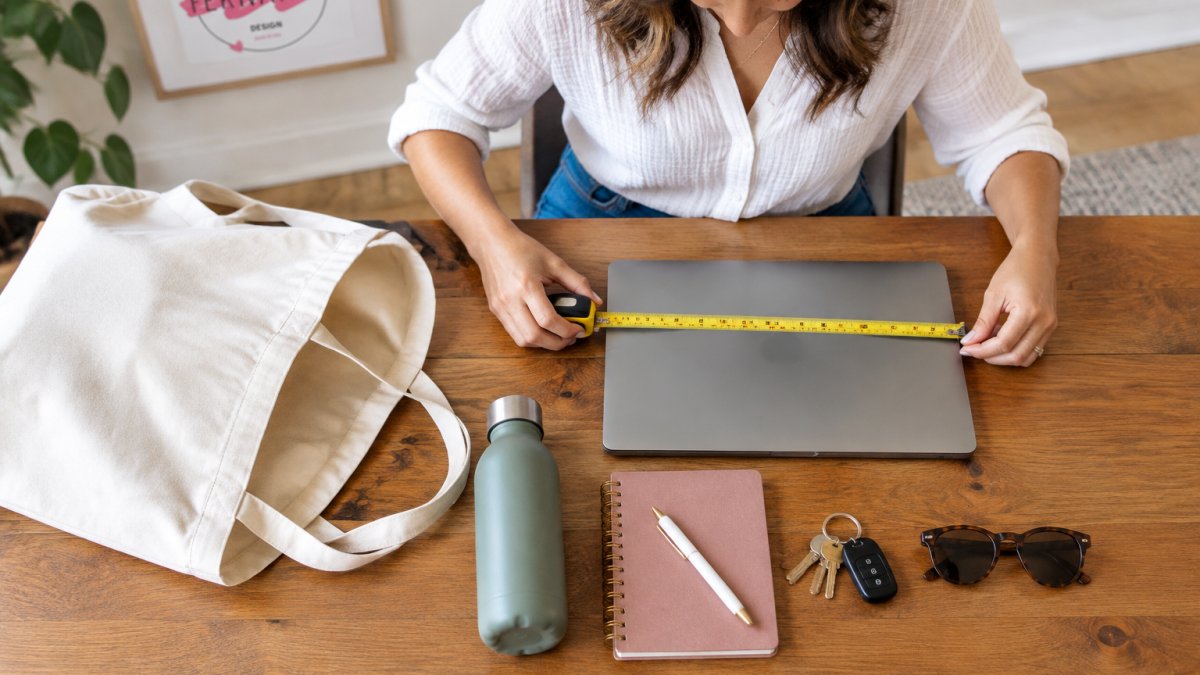
An everyday tote bag is a soft-sided carryall with two shoulder straps, designed to hold your daily essentials without a structured frame. Its job is simple: carry your real life, comfortably, every day.
Here's the part most guides skip. Your bag fails when it's sized for an idea of your day, not the actual day. So before you look at a single bag, empty the one you carry now.
Empty Your Current Bag and Measure the Largest Item
Dump everything onto a table. Then sort it into two piles.
- Everyday items: wallet, keys, phone, water bottle, sunglasses
- Sometimes items: laptop, lunch, gym clothes, a notebook
Now measure the biggest item with a tape measure. Write down its length, width, and thickness in inches. That laptop or binder sets your minimum bag size.
Add up the rest. A water bottle, a lunch container, and a paperback stack up fast. Your bag needs room for the whole pile, plus a little breathing room.
A Tote Bag Size Guide for Work, School, and Errands
A good tote bag size guide starts with one rule: match capacity to your routine, not to a trend. A work bag needs laptop room. An errands bag needs less.
Here's a simple starting point for common loads.
| Routine | Typical Load | Bag Dimensions to Look For |
|---|---|---|
| Errands and casual outings | Wallet, phone, keys, small bottle | 13 x 14 in or smaller |
| Work commute | Laptop, charger, lunch, bottle | 15 x 16 in and up |
| College or school | Laptop, notebooks, folder, bottle | 15 x 16 in and up |
| Travel personal item | Laptop, pouch, snacks, layer | 16 x 17 in and up |
These are starting points, not rules. Measure your own items and compare.
Matching Capacity to Your Routine
Think about your heaviest normal day, not your lightest. If you carry a laptop three days a week, buy for those three days.
A bag that's too small forces you to leave things behind. A bag that's too big swallows your keys and pulls on your shoulder. The sweet spot is a bag that fits your full load with a little room left.
Check the bag's listed dimensions against your largest item. Add an inch on each side for ease of loading.
Strap Drop, Width, and Weight Distribution
Strap drop is the distance from the top of the bag to the top of the handle. It decides where the bag sits on your body.
A short drop tucks the bag under your arm. A longer drop lets it hang at your hip.
Width matters just as much. Wide straps spread the load across your shoulder. Thin straps dig in when the bag gets heavy.
Adjustable straps let you change the drop to suit the day. Padded straps help on long commutes. If you carry a heavy laptop, look for straps at least 1.5 inches wide.
Interior Pockets, Organization, and Easy Access
A tote with no pockets becomes a junk drawer you carry. A few well-placed pockets fix that.
Look for a bag with:
- One slip pocket for your phone
- One zippered pocket for keys and cards
- A laptop sleeve or divider, if you carry a computer
- At least one outer pocket for quick access
Organization saves you time at the checkout line and on the train platform. It also protects your screen from your keys.
If you like a bag with personality, a playful print can do double duty as a style piece. You can see a retro cat tote bag that fits a daily routine. You can browse a colorful canvas tote that keeps your essentials easy to reach.


Open Top or an Everyday Tote Bag With Zipper?
An everyday tote bag with zipper wins on security. An open-top design wins on speed. The right choice depends on where you carry it.
Open-top totes are easy to load and grab from. They're great for errands, markets, and short trips. But on a crowded bus or in a busy café, an open bag invites trouble.
A zippered closure keeps your wallet and phone out of sight. It also stops rain and spills from getting in. If you commute through crowds or carry valuables, choose the zipper.
Some totes split the difference with a magnetic snap or a small inner zip pocket. If you want to see how a specific design handles closure and style, you can view a retro tote with contrast handles and compare the details.

Why a Canvas Tote Bag for Everyday Use Wins on Durability
A canvas tote bag for everyday use holds up better than most fabrics because of how the weave is built, not because of a label. Heavy cotton canvas is a common choice for durable totes. But "canvas" covers a wide range, and the difference between a bag that lasts five years and one that fails in five months usually comes down to fabric weight, stitch density, and how the straps are attached.
Fabric Weight and Weave
Canvas is measured in ounces per square yard. A 10-ounce canvas is light and floppy; a 12-ounce canvas is a common middle ground for everyday totes; an 18-ounce canvas is stiff and heavy-duty.
The weave matters too. A tight, plain weave resists abrasion better than a loose basket weave, because there is less room for individual yarns to shift and fray. Hold the bag up to a light: if you can see a lot of daylight through the fabric, the weave is loose and the bag will likely pill and stretch.
Stitching, Hardware, and Stress Points
Check the seams first, and look at how the straps are attached before you buy.
Weather Resistance and Material Trade-offs
Canvas handles light rain well but soaks through in a downpour. Waxed canvas sheds water better but can transfer wax to light clothing and needs re-waxing over time. Leather looks sharp but needs care and dislikes water; untreated leather can stain when wet. Nylon dries fast and resists abrasion but shows wear as a sheen and can look less structured.
No fabric does everything. Match the material to your weather and your care habits. If you commute on foot in a rainy climate, a waxed canvas or nylon tote with a zippered top will outperform an untreated cotton canvas bag.
Is a Sustainable Tote Bag Worth the Extra Cost?
A sustainable tote bag can cost more than a conventional one. The question is whether that extra cost pays you back. Most buying guides stop at "it lasts longer," but the real answer depends on three things competitors rarely cover: what the material is made of, whether the bag can be repaired, and what happens to it at the end of its life.
Material Sourcing and What the Labels Mean
"Sustainable" is not a regulated term for bags, so treat it as a starting point rather than a guarantee. Look for specific claims you can verify. Organic cotton is grown without synthetic pesticides and is traceable through certification programs. Recycled polyester is made from post-consumer plastic bottles, which diverts waste but still sheds microfibers when washed.
Ask what percentage of the material is recycled or organic, and whether the brand publishes any sourcing information. If the answer is vague, the premium may be marketing rather than material.
Repairability and Expected Lifespan
A bag with a simple, open construction is easier for a local tailor or cobbler to repair than one with fused layers and hidden seams.
The practical test is whether the bag's weakest point, usually the handle attachment or the base corners, can be reinforced or repaired before it fails.
End-of-Life and Practical Value
At the end of its life, a cotton or hemp canvas bag can often be composted or recycled through textile programs, while synthetic bags usually cannot. Leather may be repairable but is harder to recycle.
Look for signs of real quality:
- Reinforced stitching at the handles
- Thick, dense fabric
- Clean seams with no loose threads
- Hardware that feels sturdy and can be replaced
These same signals help you judge any handmade item. Our guide on how to choose artisan hair clips covers how to spot real craftsmanship. You can also read about artisan lifestyle products for home decor to see why handmade pieces tend to last longer.
Run the Load-and-Fit Test Before You Buy
Here's the test most shoppers skip. Do it before you pay.
- Pack it. Bring your real items, or use the store's display items to mimic them.
- Load the bag. Put in your heaviest item first, then the rest.
- Check the base. The bottom should stay flat, not sag.
- Lift it by one strap. If the bag tips hard or the strap digs in, keep looking.
- Reach for your phone. Can you get it out without unpacking? If not, the pockets fail.
- Walk a few steps. The bag should stay on your shoulder without you gripping it.
- Check the closure. Zip it, snap it, or open it as you would in real use.
If the bag passes all seven, it fits your life. If it fails two or more, walk away.
Test the bag loaded, not just empty, since a bag that feels fine empty can feel heavy once full.
Picking the right tote comes down to measuring your real load, checking the straps, and testing the fit before you buy. At Fernanda Design, we make handmade accessories and canvas totes with the same care we put into every piece, from one-of-a-kind designs to artisan craftsmanship made in the USA.
Frequently Asked Questions
What size tote bag is best for everyday use?
Most everyday tote bags land between 10 and 15 liters, which fits a laptop, water bottle, wallet, and a light layer. The right size depends on your largest item: measure your laptop or notebook first, then add roughly 2 inches of clearance on each side. If you carry gym clothes or groceries, size up. If you commute with just a phone and wallet, a smaller tote keeps the bag from swallowing your essentials.
Should an everyday tote bag have a zipper?
An everyday tote bag with zipper closure suits commutes, crowded transit, and travel because your wallet and phone stay covered. Open-top designs offer faster access for errands and market runs. If you split your time between both, look for a zippered main compartment plus an open exterior pocket. Check that the zipper glides smoothly and the pull is easy to grab, since a stiff zipper defeats the purpose on a bag you open dozens of times a day.
Is canvas or leather better for an everyday tote bag?
Canvas is lighter, easier to clean, and typically costs less, which makes it a practical canvas tote bag for everyday use. Heavy canvas in the 12 oz range holds shape and resists daily wear. Leather ages well and handles rain better but adds weight and price. For most people carrying a laptop and lunch, canvas wins on comfort. Whichever you pick, check the stitching at the strap joins, since that is where totes fail first.
What should I keep in my everyday tote bag?
Keep the load to what you actually use daily: wallet, keys, phone, a small pouch for chargers and cables, water bottle, and any work items like a laptop or notebook. A zippered interior pocket holds small items so they do not sink to the bottom. Weigh the packed bag before committing to a size; a tote that sits above roughly 10 pounds all day starts to dig into your shoulder, so wide straps and even weight distribution matter as much as capacity.
