

Polymer Clay Earrings for Daily Wear: Durability Guide
Table of Contents
- Are Polymer Clay Earrings Durable for Daily Wear?
- What Makes Polymer Clay Earrings Strong or Fragile
- How to Care for Polymer Clay Jewelry Without Damage
- Are Polymer Clay Earrings Waterproof?
- How to Store Handmade Earrings for Long-Term Protection
- Signs of Low-Quality Clay and What to Avoid
- Repair and Restoration When Polymer Clay Earrings Break
- Hardware Quality: Why Earring Posts and Jump Rings Matter
- Frequently Asked Questions
Last Updated: October 2, 2026
Are Polymer Clay Earrings Durable for Daily Wear?
Polymer clay earrings can absolutely be durable for daily wear when crafted properly and cared for thoughtfully. The question isn't whether polymer clay earrings durable materials can withstand everyday use, it's whether you're starting with quality clay, proper baking, and the right hardware. At Fernanda Design, we create handmade polymer clay earrings using hypoallergenic surgical steel posts.

The truth is, polymer clay earrings are more resilient than most people assume. Many jewelry makers and wearers treat them as delicate pieces meant only for special occasions, but that's a misconception rooted in poor construction practices rather than material limitations. The real durability question comes down to three factors: the quality of the clay itself, the curing process used during creation, and how you handle and maintain your pieces.
Handmade earrings crafted from premium polymer clay and finished with proper sealing can last years with regular wear. The key is understanding what makes some polymer clay earrings fragile while others thrive in a daily rotation. Below, we'll walk you through exactly what determines durability, how to care for your pieces, and what to watch for when selecting earrings that will actually hold up.
What Makes Polymer Clay Earrings Strong or Fragile
The durability of polymer clay earrings depends entirely on how the material is prepared, baked, and finished. Not all polymer clay is created equal, and the difference between a pair that lasts months and one that lasts years often comes down to choices made before the earring ever touches your ear.
Tensile Strength and Flexibility
Polymer clay possesses inherent tensile strength, the ability to resist breaking under tension, but this strength varies dramatically based on clay quality and preparation. Premium polymer clay brands are formulated to cure into a flexible, durable material that can withstand the minor stresses of daily wear without cracking or shattering. Lower-quality clay tends to cure brittle, meaning it becomes rigid and prone to breakage when pressure is applied.

The flexibility of properly cured polymer clay is actually one of its greatest assets. Unlike ceramic or glass, which are rigid and shatter under impact, quality polymer clay flexes slightly. This flexibility absorbs the small bumps, pulls, and pressure changes that happen naturally when you wear jewelry daily. A pair of earrings that can bend slightly without breaking will survive far longer than one that's rigid and inflexible.
Why Baking Temperature and Curing Process Matter
The curing process is where durability is either built or lost. Polymer clay requires precise oven-bake conditions to achieve maximum structural integrity. Underbaking, removing the clay from the oven before it's fully cured, leaves the material soft and prone to warping, cracking, and breaking. Overbaking can cause discoloration and can actually weaken the material by breaking down its polymer chains.
At Fernanda Design, we follow strict curing protocols to ensure every piece reaches full tensile strength. The difference between a piece baked at the correct temperature and one that's slightly underbaked is the difference between earrings that last years and ones that fail within months.
After baking, the cooling process matters too. Rapid temperature changes can cause stress fractures that won't be visible immediately but will weaken the piece over time. Proper cooling, allowing the clay to cool gradually, ensures the material sets uniformly and maintains its structural integrity.
How to Care for Polymer Clay Jewelry Without Damage
Daily wear requires active care. Your polymer clay earrings durable enough for routine use, but they still need protection from conditions that can compromise their longevity.

Cleaning Safely
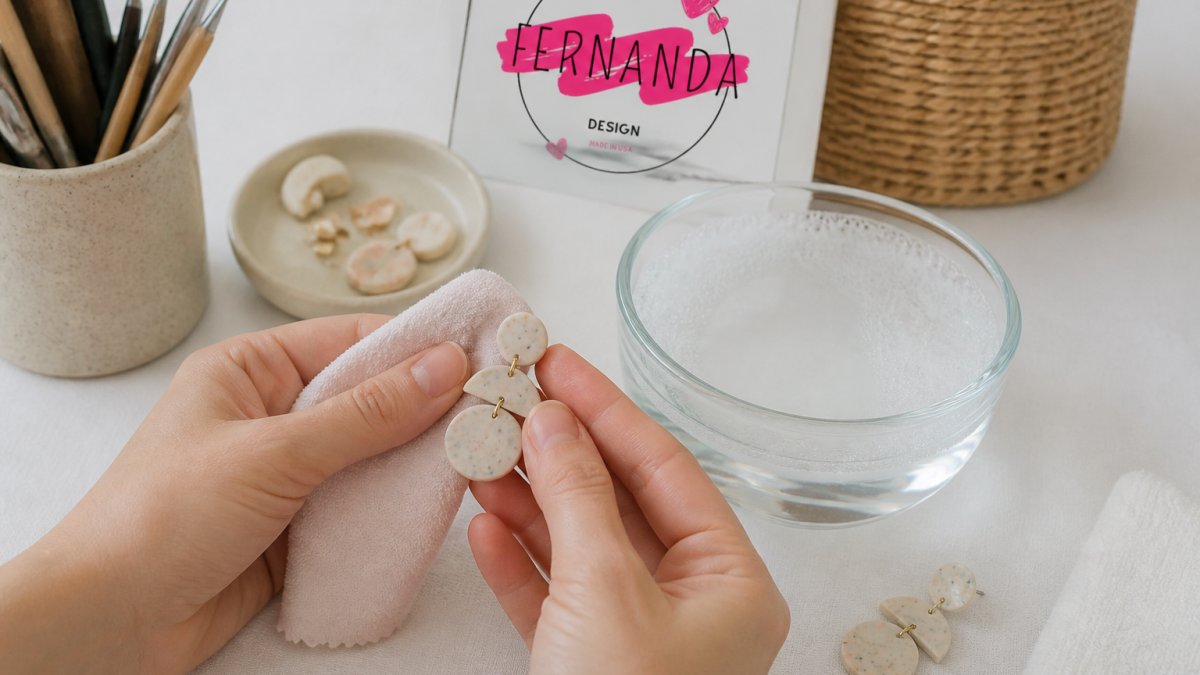
Gentle cleaning keeps your earrings looking vibrant and prevents buildup that can trap moisture. Use lukewarm water and a soft cloth with mild soap, the same approach you'd use for delicate jewelry. Avoid harsh chemicals, abrasive scrubbing, and hot water, which can weaken the surface finish and the material itself.
Pat your earrings dry immediately after cleaning rather than letting them air dry. Lingering moisture can seep into microscopic cracks or gaps between the clay and hardware, potentially causing the material to soften or the posts to corrode over time.
Daily Handling Precautions
Remove your earrings before showering, swimming, or exercising. Water exposure during these activities is more intense than casual cleaning, and the repeated wetting and drying cycles can stress the material.
Store your earrings in a dry location when you're not wearing them. Avoid leaving them in bathrooms where humidity fluctuates, or in direct sunlight, which can fade colors over time. A small jewelry box or pouch works well for this purpose.
| Care Task | Frequency | Best Practice |
|---|---|---|
| Gentle cleaning with mild soap | Weekly or as needed | Soft cloth, lukewarm water, pat dry |
| Remove before water activities | Every time | Before shower, swim, or exercise |
| Check posts and jump rings | Monthly | Ensure hardware is secure and not corroded |
| Store in dry location | Always | Avoid humidity, direct sunlight, heat |
Are Polymer Clay Earrings Waterproof?
Polymer clay itself is water-resistant, not waterproof. The distinction matters for daily wear decisions. Water-resistant means the material can handle brief exposure to moisture without immediate damage. Waterproof means it can be submerged indefinitely without any water penetration.
Properly cured polymer clay with a quality surface finish resists water penetration for short periods. This is why casual splashing during handwashing or light rain won't destroy your earrings. However, prolonged water exposure, swimming, or submerging your earrings can eventually allow water to seep into the material or corrode the metal posts.
The real vulnerability is at the junction where the clay meets the metal post. This seam is the most water-sensitive part of the earring. If water penetrates this area, it can cause the clay to soften, the post to corrode, or the connection to weaken over time. This is why removing earrings before showers and swimming is essential, not because the clay itself will instantly dissolve, but because extended water exposure will compromise durability.
How to Store Handmade Earrings for Long-Term Protection
Storage conditions directly impact how long your earrings remain vibrant and structurally sound. The enemies of polymer clay are heat, UV light, humidity fluctuations, and physical pressure.
Store your earrings in a cool, dry place away from direct sunlight. A drawer, jewelry box, or small pouch works well. If you store multiple pairs together, use a soft organizer or wrap each pair individually in a soft cloth to prevent them from rubbing against each other, which can cause surface scratches and wear.
Avoid storing earrings in plastic bags without ventilation. Paper-lined boxes or cloth pouches allow the material to breathe while protecting it from dust and light.
Temperature stability is important too. Avoid storing earrings near heat sources, air vents, or windows where temperature fluctuates significantly. Extreme heat can soften the clay slightly, while rapid temperature changes can stress the material. A room-temperature closet or drawer is ideal.
Signs of Low-Quality Clay and What to Avoid
Not all polymer clay earrings are created equal. Knowing what to look for helps you avoid pieces that will fail quickly.
Low-quality clay often looks dull or chalky rather than vibrant and glossy. If earrings look matte and feel slightly grainy or powdery to the touch, the clay is likely low-quality or improperly finished.
Brittle earrings are another red flag. If a pair feels rigid and doesn't have any slight flexibility, it's either underbaked or made from inferior clay.
Uneven thickness or visible air bubbles in the clay suggest rushed or careless craftsmanship. These weak points are where breakage typically begins.
Repair and Restoration When Polymer Clay Earrings Break
Even well-made earrings can break if they're dropped or subjected to pressure. The good news is that polymer clay earrings are often repairable, unlike ceramic or glass pieces.
Hardware Quality: Why Earring Posts and Jump Rings Matter
The metal components of your earrings are just as important as the clay itself for long-term durability. Poor hardware can fail even if the polymer clay is perfect.
Frequently Asked Questions
How durable are polymer clay earrings for everyday use?
Polymer clay earrings are durable for daily wear when made with proper baking and curing techniques. Premium polymer clay has good tensile strength and flexibility, meaning it resists breakage better than brittle materials. The key is that the clay must be baked at the correct temperature to achieve structural integrity. Most handmade polymer clay earrings hold up well to regular wear, though they require gentle handling and proper storage to avoid damage over time.
What is the best way to care for polymer clay jewelry?
Clean your polymer clay earrings with a soft, damp cloth and mild soap, then dry immediately. Avoid harsh chemicals, abrasive cleaners, and prolonged soaking. Remove earrings before showering or swimming, and store them in a cool, dry place away from direct sunlight and heat. Handle them gently to prevent dropping, and avoid bending or twisting the posts. With proper jewelry maintenance, your handmade earrings will stay vibrant and intact for years.
Are polymer clay earrings waterproof?
Polymer clay itself is not waterproof, though properly baked and sealed earrings resist moisture better. These earrings are not designed for swimming or constant water exposure. Remove your earrings before showering, bathing, or swimming. Occasional splashes during handwashing are fine, but prolonged moisture can damage the clay and cause discoloration or swelling. For water-resistant options, look for pieces with a protective resin sealing applied during crafting.
Can you repair polymer clay earrings if they break?
Small cracks or breaks in polymer clay earrings can sometimes be repaired using polymer clay adhesive or epoxy designed for clay. Clean the broken edges, apply the adhesive, press firmly, and allow it to cure fully. For structural breaks near the post or major damage, replacement may be more practical than repair. Prevention through proper storage and careful handling is always better than attempting repairs.