

Hypoallergenic Earrings for Sensitive Skin: A How-To Guide
Table of Contents
- Understanding Metal Sensitivities and Allergic Reactions
- Best Hypoallergenic Metals for Sensitive Ears
- Metals to Avoid for Sensitive Ears
- Polymer Clay Earrings for Sensitive Skin
- How to Treat Earring Irritation
- Cleaning and Maintaining Hypoallergenic Earrings
- How to Identify High-Quality Hypoallergenic Jewelry
- Frequently Asked Questions
Last Updated: October 4, 2026
Understanding Metal Sensitivities and Allergic Reactions
Metal sensitivities develop when your immune system reacts to contact with certain metals, triggering inflammation and discomfort. At Fernanda Design, we understand how frustrating it is to find hypoallergenic earrings sensitive skin won't reject, which is why we focus on creating pieces with hypoallergenic materials that work for sensitive ears.
The most common culprit is nickel, a base metal found in many affordable jewelry pieces. When nickel touches your skin, it can leach into the epidermis, causing your body to mount an immune response. This reaction isn't immediate, it develops over time as your skin becomes sensitized to the metal.
How Contact Dermatitis Develops
Contact dermatitis is the clinical term for the rash and irritation that results from repeated exposure to an allergen. Your skin barrier naturally protects you, but when a metal like nickel penetrates it, your immune cells recognize it as a threat. With each subsequent exposure, your body's response intensifies.
The process typically unfolds over weeks or months of wearing problematic earrings. You might notice mild itching at first, then redness appears. If you continue wearing the irritating earrings, the inflammation worsens and can persist even after you remove them. This is why identifying your specific metal sensitivity early matters, stopping exposure prevents the condition from becoming chronic.
Signs of an Allergic Reaction to Earrings
An allergic reaction to earrings manifests as redness, swelling, itching, and sometimes a burning sensation around the earlobe. These symptoms typically appear within 24 to 48 hours of wearing the problematic earrings, though some people develop reactions more slowly.
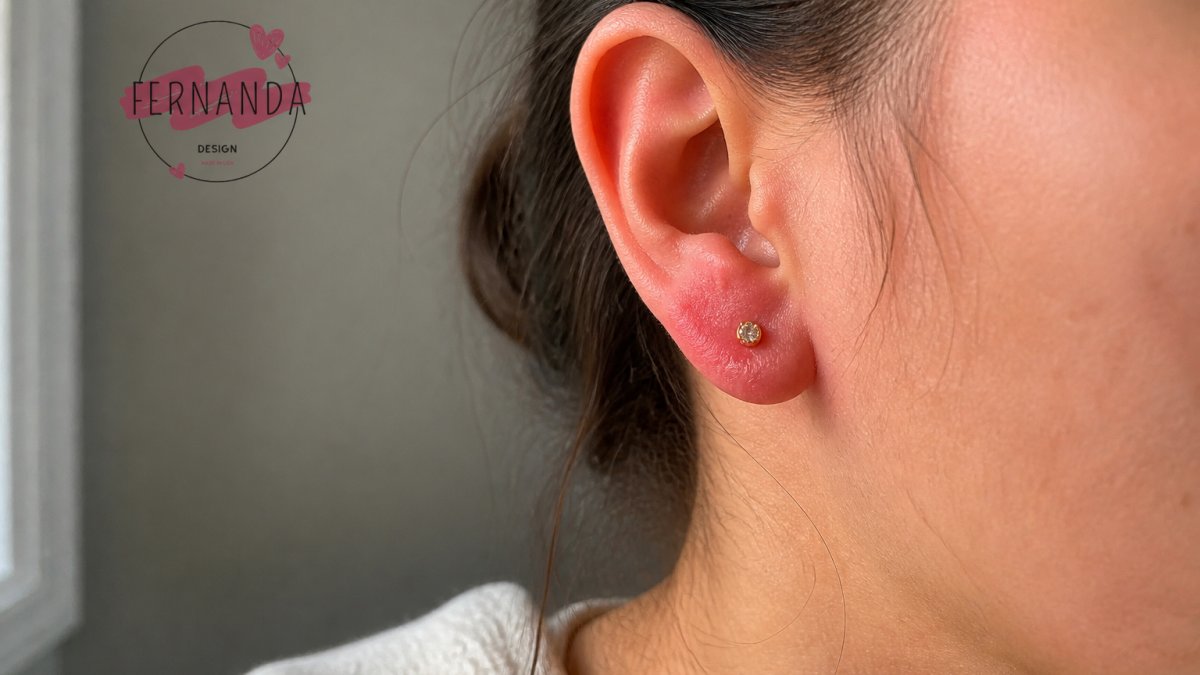
More severe reactions include fluid discharge, crusting, or a spreading rash beyond the piercing site. If you experience these symptoms, remove the earrings immediately and avoid wearing them again. Mild cases typically resolve within a few days of stopping exposure, but persistent reactions may require dermatological attention.
Best Hypoallergenic Metals for Sensitive Ears
When selecting hypoallergenic earrings sensitive skin can tolerate, your best options are metals with high biocompatibility and corrosion resistance. These materials don't leach ions into your skin and won't trigger allergic responses in most people.
Surgical-Grade Stainless Steel and Titanium
Surgical-grade stainless steel (316L or 316LVM) is one of the most popular choices for hypoallergenic earrings because it's affordable, durable, and rarely causes reactions. The steel is alloyed with chromium and molybdenum, which create a protective oxide layer that prevents nickel leaching.
Implant-grade titanium is even more hypoallergenic than stainless steel. Titanium is naturally biocompatible, it's the same material used in surgical implants and dental work. It's lighter than steel, hypoallergenic, and resistant to corrosion. If you have severe sensitivities, titanium is often the safest choice.
Both materials work beautifully for everyday wear. Our Love Stroke Earrings and Electric Duo Earrings feature these posts, combining artistic flair with skin-safe construction.


Gold, Platinum, and Niobium Options
14-karat and 18-karat gold are generally hypoallergenic when they're pure enough. The higher the karat rating, the more pure gold is present and the less base metal alloy is mixed in.
White gold and rose gold are created by mixing gold with other metals, so check the alloy composition. Some white gold contains nickel, which defeats the purpose of choosing gold for sensitive skin.
Platinum is one of the most hypoallergenic metals available. It's naturally pure, doesn't require alloying with problematic metals, and is extremely durable. The downside is cost, platinum earrings are significantly more expensive than other options.
Niobium is a lesser-known but excellent choice for sensitive skin. It's hypoallergenic, lightweight, and affordable. Niobium doesn't require plating and won't tarnish or corrode, making it ideal for long-term wear.
Metals to Avoid for Sensitive Ears
Nickel is the primary metal to avoid. It's the most common cause of contact dermatitis from jewelry and appears in many inexpensive earrings, even those labeled "nickel-free" (which often contain trace amounts).
Brass, copper, and unplated base metals should also be avoided. These metals corrode easily and leach into your skin, especially when exposed to moisture or sweat. Plated metals, gold-plated, silver-plated, or rhodium-plated, are risky because the plating wears away with regular wear, exposing the base metal underneath.
Avoid costume jewelry, fashion jewelry, and pieces from unclear sources. These often contain multiple problem metals and aren't manufactured with sensitive skin in mind. The savings aren't worth the irritation and potential for developing a chronic metal sensitivity.
Polymer Clay Earrings for Sensitive Skin
Polymer clay earrings offer a unique solution for people with severe metal sensitivities. The clay itself is completely hypoallergenic, it's a synthetic material that doesn't contain any metals or common allergens. What matters is the hardware: the posts and backs that go through your piercing.
Fernanda Design creates polymer clay earrings with hypoallergenic surgical steel posts, combining artistic design with skin safety. Our Magenta Royale Earrings and Violet Disc Earrings showcase how polymer clay allows for vibrant, unique designs while remaining lightweight and comfortable for sensitive ears.

The clay is baked during manufacturing, creating a durable finish that resists chipping and fading. Polymer clay earrings are also significantly lighter than metal earrings, reducing strain on your earlobes during extended wear.
How to Treat Earring Irritation
Earring irritation falls into two distinct scenarios: acute reactions to problematic metals in established piercings, and complications during the healing phase of new piercings. Understanding which situation you're in determines the right treatment approach.
Immediate Steps for Acute Reactions
Once you've identified that an earring is causing irritation, immediate action prevents the problem from worsening. Remove the earrings as soon as you notice discomfort and switch to a different pair made from hypoallergenic materials.
Clean the affected area gently with mild soap and water. Pat dry with a clean towel; don't rub. If the area is swollen or itchy, apply a cool compress for 10-15 minutes to reduce inflammation. Over-the-counter hydrocortisone cream (1%) can help with itching and redness, though you should consult a dermatologist if symptoms persist beyond three days or worsen.
Avoid wearing any earrings in that piercing for at least a week, longer if the irritation is severe. This gives your skin time to heal and your immune response to calm down.
Post-Piercing Care Protocols: The Critical First 8 Weeks
New piercings require a fundamentally different care approach than established ones.
During the initial healing phase:
- Use only hypoallergenic posts (implant-grade titanium or surgical-grade stainless steel 316L/316LVM) in new piercings. This is non-negotiable; fashion jewelry or unknown metals during healing can trigger contact dermatitis that becomes chronic.
- Clean the piercing twice daily with sterile saline solution or a piercing-specific aftercare spray. These are gentler than soap and won't disrupt the healing tissue. Avoid hydrogen peroxide and alcohol, which damage healthy tissue.
- Don't sleep on the side of your new piercing for at least the first two weeks. Pressure irritates the wound and slows healing.
- Avoid swimming, hot tubs, saunas, and activities that expose the piercing to bacteria, chlorine, or salt water. These environments significantly increase infection risk and can trigger inflammatory reactions.
- Keep your hands away from the piercing except during cleaning. Touching with unwashed hands introduces bacteria and can cause secondary infections that complicate healing.
Transitioning after healing (weeks 8+): Once your piercing is fully healed, you have more flexibility, but the foundation you've built matters. If you wore hypoallergenic materials during healing, your piercing channel is conditioned to tolerate those metals.
If you developed irritation during the healing phase, redness, swelling, discharge, or persistent itching, don't assume the piercing is hopeless.
Long-term sensitivity prevention: The metal choices you make in the first months of a new piercing influence your skin's response for years. Piercings established with hypoallergenic materials are far less likely to develop chronic sensitivities.
Cleaning and Maintaining Hypoallergenic Earrings
Proper maintenance extends the life of your earrings and prevents buildup that can irritate your skin. Clean your hypoallergenic earrings regularly to remove dead skin cells, oils, and bacteria that accumulate from daily wear.
For metal earrings, use a soft cloth slightly dampened with mild soap and water. Dry thoroughly before wearing. For polymer clay earrings like those from Fernanda Design, a gentle wipe with a soft, dry cloth is usually sufficient.
Store your earrings in a clean, dry place away from humidity. Keep metal and polymer clay earrings separate to prevent scratching. If you notice any discoloration or buildup on the posts, soak them in a solution of equal parts white vinegar and water for a few minutes, then rinse and dry completely.
How to Identify High-Quality Hypoallergenic Jewelry
Not all jewelry labeled "hypoallergenic" actually is. Learning to identify quality pieces, and verify their composition, protects you from irritation and ensures your investment lasts.
Checking for Purity and Certification
For metal earrings, look for clear labeling of the metal type and purity. Surgical-grade stainless steel should be marked as 316L or 316LVM. Titanium should be labeled as implant-grade or ASTM F136. Gold should specify the karat rating (14K or 18K minimum for sensitive skin).
Reputable sellers provide documentation of material composition. If a piece doesn't clearly state what metal it's made from, that's a red flag. Avoid anything simply labeled "nickel-free" without additional specification; this term is often misused and doesn't guarantee safety.
Testing Jewelry for Nickel Content at Home
If you own earrings without clear labeling or want to verify that a piece is truly nickel-free, dimethylglyoxime (DMG) test kits offer an affordable way to check at home.
How DMG test kits work: The kit typically includes a small bottle of DMG solution and cotton swabs or applicator tips.
DMG kits are widely available online and cost between $8 and $20 for a multi-use bottle. They're particularly useful for testing vintage earrings, inherited pieces, or jewelry from sellers without clear material documentation.
Limitations to understand: A negative result (no color change) doesn't guarantee the earring is completely safe, it means no nickel was detected on the tested surface. Some earrings have a protective coating that prevents leaching, so they may test negative but still contain nickel underneath.
Evaluating Earring Posts and Hardware
The posts are as important as the main earring body. Examine them closely; they should be smooth, well-finished, and made from a hypoallergenic material. Rough or poorly finished posts can scratch your skin and increase irritation risk.
The backs (butterfly backs, screw backs, or leverbacks) should also be hypoallergenic. Many people develop sensitivity to backs without realizing it, so ensure they're made from the same material as the posts.
For artisan pieces like Fernanda Design's handmade earrings, the craftsmanship is evident in the finishing details. Each pair is made with care to ensure posts are smooth, secure, and comfortable for extended wear. When you can see and feel quality construction, you're more likely to have a positive experience with sensitive skin.
Frequently Asked Questions
What are the best hypoallergenic earrings for sensitive skin?
The best hypoallergenic earrings feature surgical-grade stainless steel, implant-grade titanium, 14k or 18k gold, platinum, or niobium posts. Look for earrings specifically labeled nickel-free and lead-free. Polymer clay earrings with hypoallergenic surgical steel hardware, like those from Fernanda Design, offer a lightweight, comfortable option. Always verify the material composition and choose dermatologist-recommended options when possible.
How do I know if my earrings are causing an allergic reaction?
Signs of an allergic reaction include redness, swelling, itching, and tenderness around the earlobe. You may also notice discharge, crusting, or a burning sensation. Contact dermatitis typically develops within hours to days of wearing problematic earrings. If symptoms persist after removing the earrings, consult a dermatologist. Keep a record of which earrings trigger reactions to identify the offending metal.
Are polymer clay earrings suitable for sensitive skin?
Yes, polymer clay earrings can be excellent for sensitive skin when paired with hypoallergenic hardware. Polymer clay itself is non-toxic and non-reactive, making it safe for direct skin contact. The key is ensuring the earring posts and backs are made from surgical-grade stainless steel or titanium. Handmade polymer clay earrings, like Fernanda Design's collection, combine lightweight comfort with hypoallergenic surgical steel posts, making them ideal for daily wear.
What metals should I avoid if I have sensitive ears?
Avoid nickel, cobalt, brass, and low-quality plated metals, as these commonly trigger allergic reactions and contact dermatitis. Avoid costume jewelry and fashion earrings with unknown metal composition. Also steer clear of earrings with excessive plating that can wear away and expose base metals underneath. Stick to certified hypoallergenic metals with documented purity levels and biocompatible properties.