

How to Measure Apparel for Online Shopping
Quick Summary
To measure apparel for online shopping, take your body measurements with a soft tape measure over the layers you will wear, then compare them to the matching column of the store's size chart. Measuring a well-fitting garment you already own, laid flat, is the most reliable method.
- Online apparel returns are reported at 24.4%, and size and fit cause the most, per Size.ly.
- Compare body measurements only to body columns, and garment measurements only to garment columns.
- Measure over the same bra, shapewear, or base layers you plan to wear with the garment.
- Keep the tape snug but not tight, and repeat each measurement twice to check accuracy.
- Stiff fabrics like denim or linen call for sizing up; stretch knits may fit slightly smaller.
Table of Contents
- Why Measuring Apparel Matters Before You Order Online
- Body Measurements vs. Garment Measurements: Know the Difference
- How to Measure Clothes with a Tape Measure
- How to Measure Clothes You Already Own
- How to Measure Clothes Without a Measuring Tape
- How to Compare Measurements to a Clothing Size Chart
- Ease, Stretch, and Fabric: Choosing Your Final Size
- Booking Your First Custom Fit with Fernanda Design
- Frequently Asked Questions
Why Measuring Apparel Matters Before You Order Online
Shoppers who love our embroidered and polymer clay pieces often want to know how our apparel and lifestyle items will fit before they buy.
Online shopping is growing fast. U.S. Census Bureau's quarterly e-commerce report shows U.S. e-commerce sales rose 12.4% in the second quarter of 2026 compared with the same quarter of 2025.
Measuring also helps you avoid the time and shipping costs that come with returns. Get the numbers right the first time.
Body Measurements vs. Garment Measurements: Know the Difference
Body measurements describe your shape. Garment measurements describe the clothing itself. Mixing them up is one of the most common reasons people order the wrong size.
Body measurements are taken on you. They include your bust, waist, and hips.
Why does this matter? A size chart can list body measurements, garment measurements, or both.
Here is a quick guide:
- Body measurements: your bust, waist, hips, and inseam, taken on your body
- Garment measurements: the chest width, length, and sleeve length of the item, taken flat
- Ease: the extra room built into a garment so it fits and moves comfortably
Ease is the part many shoppers miss. A garment with no extra room may feel tight when you move. We cover ease in more detail below.
How to Measure Clothes with a Tape Measure
A soft, flexible tape measure is the best tool for measuring your body. Keep the tape snug but not tight, and stand up straight with relaxed posture. Have someone help you if you can, since the back measurements are hard to take alone.
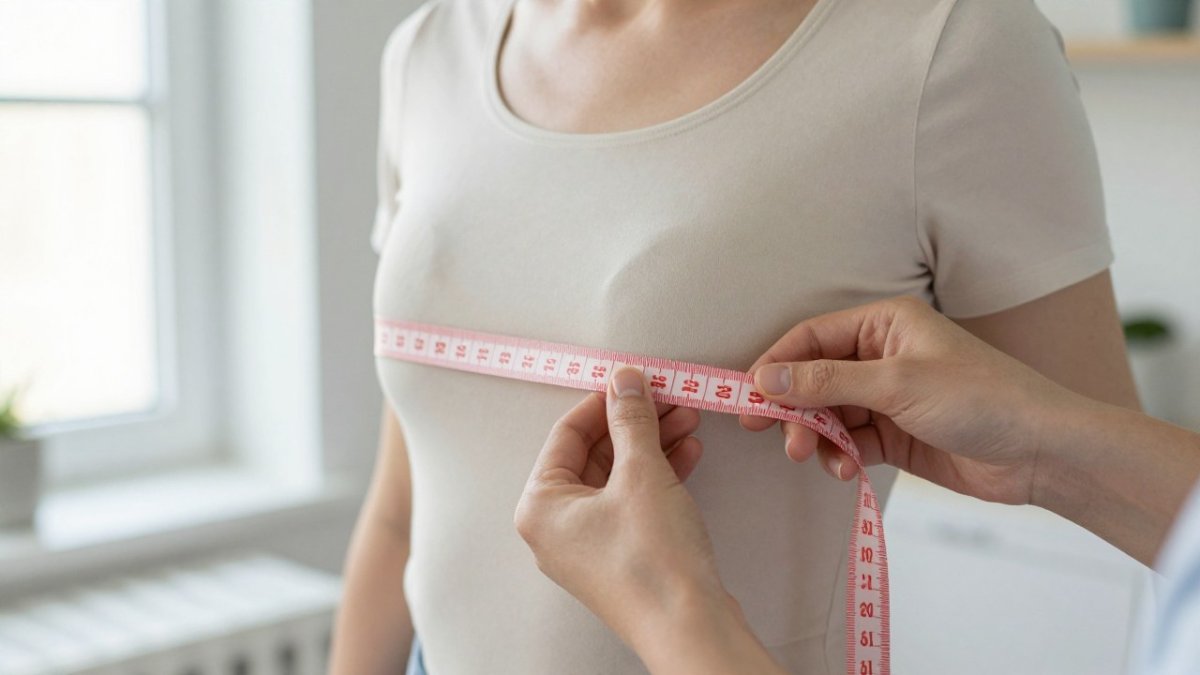
Use these steps:
- Wear the type of underwear you plan to wear under the clothing.
- Stand in front of a mirror and keep the tape level all the way around.
- Take each measurement, then write it down before you measure the next one.
- Repeat each measurement two times to check your accuracy.
Bust, Chest, Waist, and Hips: Where to Position the Tape
The position of the tape changes the number, so place it carefully.
- Bust or chest: Wrap the tape around the fullest part of the bust, keeping it level across the back.
- Waist: Find your natural waist, which is the narrowest part of your torso, usually just above the belly button.
- Hips: Measure around the fullest part of your hips and seat, usually about 7 to 9 inches below the waist.
Take the measurement in inches. If you prefer centimeters, check whether the retailer lists both.
Measuring Over Underwear or Fitted Clothing
Measure over the same layers you will wear with the garment. A bra, shapewear, or a fitted base layer can change your bust and waist numbers by an inch or more.
If you plan to wear a bra with a top, wear the bra when you measure. If you plan to wear a dress over a slip, wear the slip.
Do not measure over bulky sweaters or heavy coats. They add layers that will not be part of the final fit.
How to Measure Clothes You Already Own
Measuring a garment you already own is the most reliable way to check your size, because it removes your body from the equation entirely. Choose a top or pair of pants that fits you the way you want the new item to fit, lay it flat on a table, and smooth out any wrinkles.
Before you start, decide which fit you are matching. A shirt that fits snugly will give you different numbers than one that fits loosely, so pick the garment whose fit you actually want to replicate. Measure it twice and write the numbers down.
Measuring Tops, Dresses, and Outerwear
Lay the garment flat and button or zip it closed so the front edges meet naturally. Measure these points:
- Chest width: Measure straight across the chest from armpit seam to armpit seam, then double the number. This gives the full circumference at the chest.
- Shoulder width: Measure from one shoulder seam to the other across the back.
- Body length: Measure from the highest point of the shoulder (the seam next to the neck) straight down to the hem.
For outerwear, add a sweater allowance check: measure the chest width of a jacket you can comfortably wear over a sweater, and compare that to the new coat's listed chest width. If the new coat's chest is smaller than your layered measurement, size up.
Measuring Trousers, Jeans, and Skirts
Lay the pants flat with the legs aligned and the fly closed. Measure these points:
- Waist width: Measure straight across the top of the waistband and double it. For low-rise pants, measure at the point where the waistband actually sits.
- Hip width: Measure across the widest part of the seat, usually 7 to 9 inches below the waistband, and double it.
- Front rise: Measure from the crotch seam straight up to the top of the front waistband.
For skirts, measure the waistband width and double it, then measure the length from the top of the waistband to the hem. For A-line or pleated skirts, also measure the hem width flat and double it so you know how much sweep the skirt has.
Watch out: doubling the flat width is correct only when the store's chart lists full circumference. Some charts list half-widths, so check the chart's label before you compare.
Building a Reusable Measurement Card
Write every number on a single card or note on your phone, organized by garment type. Include the date and the brand, since sizing drifts between manufacturers and even between seasons. When you shop a new retailer, pull up the card and compare your saved garment numbers to the new item's chart. This turns a five-minute measuring session into a permanent reference that makes every future order faster and more accurate.
How to Measure Clothes Without a Measuring Tape
Try a string method. Wrap a piece of string around your bust, waist, or hips.
You can also measure a favorite garment with a ruler. Lay it flat and measure the chest width, length, and sleeve length the same way as with a tape.
Be honest about accuracy. These methods can be off by half an inch or more, so leave room for error.
How to Compare Measurements to a Clothing Size Chart
Compare your body measurements to the body column of the size chart, and compare your garment measurements to the garment column. Never compare one type against the other. This single rule prevents most sizing errors, because a body chart and a garment chart describe different things even when they sit side by side on the same product page.
Step-by-Step Comparison
- Find the chart that matches the item type, such as tops, dresses, or pants. A single store may publish separate charts for each category.
- Check whether the chart shows body measurements or garment measurements. Look for labels like "body measurements," "garment measurements," "flat measurements," or "fits like." If the chart is unlabeled, treat it as body measurements unless the numbers are clearly too small to be a body circumference.
- Find the size range that includes your largest relevant measurement. For a top, that is usually your bust; for pants, your hip. Choose the size that accommodates the largest measurement, then check whether the other measurements still work.
- Read the fit notes, such as "relaxed," "fitted," "oversized," or "true to size." These words tell you how much ease the designer built in.
What to Do When You Fall Between Two Sizes
Falling between sizes is common, and the right choice depends on the garment, not on a universal rule. Use this decision order:
- Check the fabric first. Stiff woven fabrics like denim or linen have little give, so choose the larger size. Knits with spandex or elastane can stretch, so the smaller size may work.
- Check the intended fit. A fitted garment should follow your measurements closely; an oversized garment is meant to have extra room, so the smaller size may still look relaxed.
- Check the reviews. Search the product reviews for the words "runs small," "runs large," or "size up." A pattern of comments from multiple reviewers is more reliable than a single review.
Watch out: a chart that lists only one number per size, such as a single "chest" figure, is usually a garment measurement, not a body measurement. Confirm before you compare.
Using Measurements to Reduce Returns
Accurate measuring only pays off if you carry the numbers through the whole purchase.
Size charts differ from brand to brand. A medium at one store may not match a medium at another, so always check the chart for the exact item you want rather than relying on the size label you usually buy.
The table below sums up the key steps for matching your measurements to a size chart.
| Step | What to do | Note |
|---|---|---|
| Find the chart | Pick the chart for your item type | Tops, dresses and pants may each have one |
| Check the chart type | Confirm body or garment measurements | Never compare one type against the other |
| Pick the size | Match your largest relevant measurement | Usually bust for tops, hip for pants |
| Read fit notes | Look for relaxed, fitted or oversized | Shows how much ease is built in |
| Check fabric | Stiff fabric: size up; stretch knit: may go smaller | Denim and linen have little give |
| Check reviews | Search for runs small or runs large | Several reviewers outweigh one |
| Check returns | Review the return window and fees | Free returns allow ordering two sizes |
Ease, Stretch, and Fabric: Choosing Your Final Size
Ease is the extra room in a garment. A fitted top may have little ease, while a loose top has a lot.
Fabric matters too:
- Stretch fabrics like knit or jersey can fit slightly smaller than the listed measurements.
- Woven fabrics like cotton or linen do not stretch, so the measurements matter more.
- Heavy fabrics like denim or wool can feel stiffer and need more room.
If an item has spandex or elastane, it may stretch to fit you. Still, do not rely on stretch alone.
When you are unsure, choose the larger size for stiff fabrics and the smaller size for stretchy ones.
Booking Your First Custom Fit with Fernanda Design
If you want a closer fit on a special piece, reach out to us before you order. At Fernanda Design, we want every piece to feel right when it arrives. Browse our shop our handmade collection to see the apparel and lifestyle items we offer, then use the measuring steps above to pick your size.
Measure carefully, compare with the size chart, and allow room for ease and fabric. Doing this first saves you time, money, and the hassle of returns.
Frequently Asked Questions
How do you measure clothes you already own?
Lay a garment that fits you well flat on a table and smooth out any wrinkles. Measure the chest or bust straight across the armpit seam, the waist across the narrowest point, and the hips across the widest part of the lower garment. Measure the length from the shoulder seam to the hem for tops and dresses, and the inseam from crotch to hem for pants. Double the flat chest, waist, and hip measurements to get circumference, then compare those numbers to the size chart of the store you plan to order from. Record the numbers so you can reuse them for future purchases.
How do you compare your measurements to an online size chart?
Take your body measurements first, using a flexible tape measure held snug but not tight. Then find the size chart on the product page and match your bust, waist, and hip numbers to the column for each size. If you fall between sizes, check the garment measurements listed in the chart, since they show the finished dimensions of the item rather than your body. Look at how much ease the garment includes and whether the fabric stretches before choosing. When your measurements fall into different sizes, many shoppers pick the size that matches their bust or chest and plan to adjust at the waist or hips.
How can you measure your body without a measuring tape?
Use a piece of string or ribbon, then mark where it meets at the places you need to measure. Lay the marked string flat against a ruler to read the length. Another option is to measure a garment that fits well, using a ruler or any straight edge, and compare the numbers to the size chart. These methods are less precise than a flexible tape, so take the measurement twice and note any difference before ordering.
Why does measuring apparel for online shopping matter so much?
Size and fit are a common reason apparel is returned. Accurate measurements help you avoid buying the wrong size and paying to ship a return. Checking your measurements against the product listing before you buy is always useful.
