

How to Identify Handmade Artisan Jewelry Quality
Table of Contents
- How to Tell If Jewelry Is Handmade
- Assessing Metal Type, Purity, and Authenticity
- Evaluating Finishing Quality and Edge Work
- Gemstone Identity and Treatment Disclosure
- What to Look for When Buying Handmade Jewelry
- How to Buy Handmade Jewelry Online Safely
- Structural Balance and Long-Term Durability
- Frequently Asked Questions
Last Updated: October 5, 2026
How to Tell If Jewelry Is Handmade
The difference between handmade artisan jewelry quality and mass-produced pieces shows up in details most people miss.

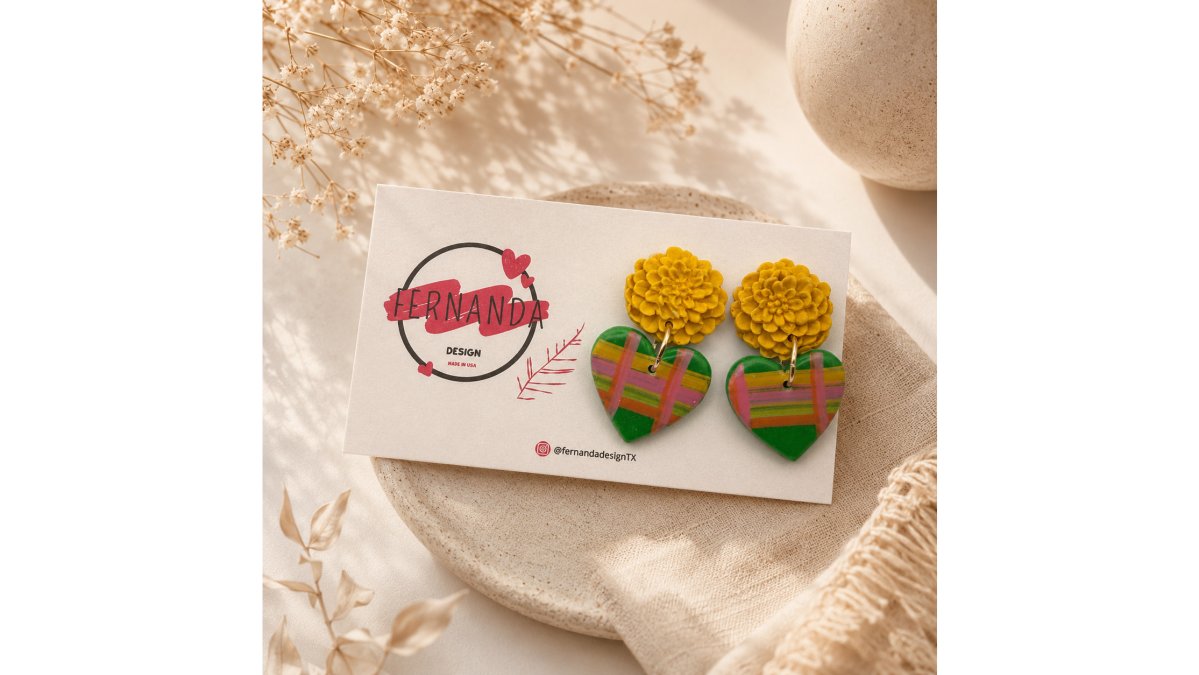
A factory-molded earring looks identical to ten thousand others; a handmade piece carries the maker's fingerprints. Spotting these markers transforms how you shop and what you pay for.
Tooling Marks and Hand Engraving
When a jeweler works by hand, their tools leave marks. These aren't flaws. They're evidence of the craft.
Look closely and you'll notice subtle texture variations where a hand file or engraving tool passed over metal; each stroke differs slightly.
Hand engraving shows intentional line work with slight width variations reflecting the engraver's pressure and angle, alive, not computer-perfect.
Run your fingertip across the piece.
Intentional Asymmetry vs. Poor Workmanship
Handmade doesn't mean imperfect, it means intentionally crafted.
A skilled artisan introduces subtle asymmetry on purpose: a bead at a slightly different angle, a hand-drawn pattern curving differently on each side.
Poor workmanship looks different: lumpy or discolored solder joints, rough or sharp edges, crooked stones, patchy finishes. These aren't variations, they're mistakes.
The distinction matters: intentional asymmetry feels deliberate and balanced, poor workmanship feels careless.
Assessing Metal Type, Purity, and Authenticity
The metal foundation determines durability, wearability, and long-term value. Handmade artisan jewelry quality depends heavily on the materials chosen.
Reading Hallmarks and Stamps
Legitimate precious metal jewelry carries stamps indicating metal type and purity.
Sterling silver carries a ".925" stamp (92.5% pure silver). Gold is marked "10K," "14K," or "18K," representing pure gold content in the alloy.
Look for stamps inside rings, on earring post backs, or hidden areas of bracelets and necklaces.
Some artisans use alternative materials intentionally. Polymer clay, resin, and other non-precious materials are legitimate when disclosed clearly, the Fernanda Design collection, for example, features handmade polymer clay earrings that are lightweight and comfortable for daily wear.

Weight and Feel as Quality Indicators
Hold two earrings side by side: one handmade, one mass-produced. The handmade piece often feels substantial. Real metal has weight.
Lightweight jewelry isn't automatically inferior, but it should match the materials.
Density also matters for durability: solid metal withstands daily wear better than thin plating over base metal.
Evaluating Finishing Quality and Edge Work
Finishing separates refined handmade artisan jewelry quality from rushed work. This is where the artisan's patience shows.
Surface Finish and Solder Joints
Run your thumb across the piece, paying attention to edges.
Solder joints, where metal pieces are joined, reveal a lot.
Look at the back, not just the front. Mass production often leaves the back unfinished because customers won't see it; handmade artisans finish all sides equally.
Gemstone Identity and Treatment Disclosure
Real gemstones add value and beauty to handmade jewelry. Understanding what you're buying protects your investment.
Natural Stones vs. Treated Stones
Natural gemstones form in the earth without human intervention.
Neither is inherently bad, many gemstones are treated to enhance color or clarity, standard industry practice. The problem is undisclosed treatment.
Handmade artisans who use gemstones should document what stones they use and any treatments applied.
Stone Setting Security and Alignment
Examine how stones are secured. Prongs should wrap tightly with no gaps; settings should be symmetrical, the stone centered and level, not tilted or crooked.
Loose stones are common in both handmade and mass-produced jewelry. A well-set stone doesn't move when gently pressed; if it shifts or rocks, the craftsmanship is poor.
What to Look for When Buying Handmade Jewelry
Shopping for handmade pieces requires a different approach than a department store. You're evaluating craftsmanship you can't hold, from a maker you may never meet. The most useful skill is knowing what to inspect, in what order, and which judgments you can trust from a photo versus which require the piece in hand.
The Seven-Point Close-Up Inspection Checklist
Whether examining a piece in person or studying close-up photos, run through these seven points in order. Each targets a specific failure mode.
- Seams and solder joints. Every joint where two metal components meet should be flush, smooth, and color-matched. Lumpy, gray, or pitted joints mean too much solder or heat; a hairline crack means the piece was stressed and will fail under flexing.
- Edges and interior surfaces. Handmade edges should be filed and polished smooth, never sharp or burred. Then check the back and inside: mass production often leaves the back rough, while an artisan who finishes all sides equally shows you their standard.
- Clasps and closures. In photos, look for a maker's mark or solder point at the attachment. In person, open and close it several times, it should operate smoothly and hold firmly. A loose or gritty clasp is a wear point that will fail first.
- Stone settings. Prongs should contact the stone at its widest point (the girdle), not float above it; bezel settings should fully enclose the stone edge with no gap. Ask for straight-on top and side views, a stone visibly tilted in a top-down photo is set crooked.
- Surface finish consistency. The finish should be uniform, or intentionally varied in a way that reads as design. Patchy polish, uneven swirl marks, or a matte patch beside a mirror finish signals rushed finishing.
- Symmetry of paired pieces. Lay earrings or matched sets side by side (or compare in photos). Intentional asymmetry looks balanced and deliberate; unintentional asymmetry, one earring larger, a stone at a different height, reads as error.
- Wear points. Identify the thinnest cross-section, where a bail meets a pendant, an ear wire tapers, a band narrows. This is where metal fatigue begins. Ask for a close-up if buying remotely.
Intentional Handmade Variation vs. Poor Workmanship
This is the most misunderstood point in handmade jewelry, where buyers most often misjudge quality in both directions.
Intentional variation is a design choice, deliberate, balanced, consistent in its logic.
Poor workmanship looks different in kind, not just in degree. Watch for:
- Uneven solder joints that are lumpy, discolored, or visible as gray blobs.
- Rough or sharp edges that catch on fabric or skin.
- Stones set crooked with visible gaps between prong and stone, or prongs that don't touch the stone at all.
The test: hold the piece (or study the photo) and ask whether the variation feels purposeful or like something went wrong.
What You Can and Cannot Judge From Photos
Online images are a partial substitute for in-person inspection. Knowing the limits prevents both overconfidence and unnecessary caution.
What photos can reliably show:
- Overall proportions and design
- Surface finish quality (with a good close-up in natural light)
- Stone color, cut, and approximate clarity
What photos cannot reliably show:
- Weight and balance in the hand
- Whether a stone is loose in its setting (unless the seller provides video)
- Clasp function and feel
What to request from the seller when buying remotely:
- Close-up photos of the back, the clasp, and each stone setting
- A photo of any hallmark or maker's mark
- Exact dimensions and weight in grams
A seller who answers these requests promptly and specifically demonstrates the same care they put into the piece. A seller who deflects or gives vague answers is also telling you something.
Seller Credibility and Transparency
The maker's reputation matters, but "good reviews" is too blunt a filter.
Ask questions a knowledgeable maker would enjoy answering: What tools did you use? How did you finish the edges? What solder?
Transparency about materials is non-negotiable. "Beautiful handmade earrings" tells you nothing; "hand-embroidered polymer clay earrings with metallic bead detailing and hypoallergenic hardware" tells you exactly what you're getting and signals the maker knows their materials.

How to Buy Handmade Jewelry Online Safely
Online shopping for handmade pieces carries risks because you can't inspect in person. Protect yourself with these strategies.
Verifying Maker Provenance and Ethical Sourcing
Know who made your jewelry. Legitimate handmade sellers share their background, location, and process.
Ethical sourcing matters if it's important to you.
Ask for specifics: Where are materials sourced? How are workers treated? A maker who answers is more trustworthy than one who avoids the questions.
Returns, Warranty, and Care Instructions
Reputable handmade sellers offer return policies.
Care instructions matter for longevity. Handmade pieces often require specific care, some metals need polishing, some stones need protection from chemicals.
Look for warranty information. Many artisans offer repairs or replacements if a piece breaks within a reasonable timeframe.
Structural Balance and Long-Term Durability
Handmade artisan jewelry quality isn't just about looks, it's about whether the piece survives years of wear and can be brought back to life when something fails. Rather than stopping at "check the clasp," inspect the specific points where jewelry actually breaks, then judge whether the piece was designed to be repaired.
The Five Wear Points to Inspect First
Nearly every jewelry failure happens at one of five locations. Inspect these first:
- The clasp or closure. Open and close it ten times. A lobster clasp should snap shut with a firm, audible click and release only when the lever is depressed; a spring-ring should return fully closed without sticking. Magnetic clasps fail more often under load, a durability trade-off, not a neutral choice. On earrings, check that the post or hook is soldered or welded, not glued.
- The jump rings and connectors. A jump ring simply bent closed can pull open under tension; a properly finished one is soldered shut or twisted so the ends overlap and cannot separate. Tug gently on each connector, if the ring gapes, the piece will eventually drop off a wrist or neck.
- The solder joints. Where two metal components meet, the joint should be flush, color-matched, and smooth. A lumpy or gray joint means too much solder or heat; a hairline crack means the piece was stressed during finishing and will fail under repeated flexing.
- The stone settings. Press each stone gently, it should not rock, spin, or click. Prongs should contact the stone at the girdle (its widest point), not float above it; bezel settings should fully enclose the stone edge with no visible gap.
- The thinnest cross-section. Find the narrowest part, where a pendant bail meets the body, an ear wire tapers, a band narrows. This is where metal fatigue begins. A ring shank thinning below roughly one millimeter at the base will bend or crack within a year of daily wear; a chain link visibly thinner than its neighbors is a stress point waiting to fail.
Material-Specific Durability Expectations
Durability advice only makes sense tied to the material. Here's how common handmade materials compare:
- Sterling silver (.925). Relatively soft, scratches and bends more easily than gold, but work-hardens with wear and is highly repairable. Tarnish is a surface condition, not structural damage, and polishes out. Good for earrings, pendants, and bracelets not subjected to heavy torque.
- Solid gold (10K, 14K, 18K). 14K is the durability sweet spot for daily-wear rings and bracelets: harder than 18K, more tarnish-resistant than some 10K alloys. 18K is softer and scratches more but holds engraving detail better. 24K is too soft for most structural jewelry.
- Gold-filled and gold-plated. Gold-filled has a thick, mechanically bonded gold layer. Gold-plated is a thin electroplated layer that wears through at high-contact points, typically within months on rings. Plating isn't a defect, but it is a maintenance reality.
Repairability: The Question Most Buyers Forget to Ask
A piece that can be repaired lasts indefinitely; one that can't is disposable, no matter how well made. Before buying, ask three questions:
- Can the maker repair this piece? A working artisan should re-solder a joint, tighten a prong, or replace a clasp. Ask about turnaround time and cost.
- Can a local jeweler repair it? Some materials, titanium, certain plated finishes, some polymer clay constructions, resist standard jeweler tools. If the maker can't service it and a local jeweler can't either, the piece has a finite lifespan.
- Are replacement parts available? Earring backs, clasps, and jump rings are consumables. A maker who stocks or can source matching hardware makes long-term ownership far easier.
Care That Actually Extends Life
Care instructions should be specific to the piece, not generic. Useful rules of thumb:
- Store pieces separately or in soft pouches to prevent scratching, especially sterling silver and 18K gold.
- Put jewelry on last, after perfume, lotion, and hairspray, and take it off first at night. Chemicals and abrasion are the biggest causes of premature wear.
- Clean sterling silver with a soft polishing cloth; use silver dip sparingly, since repeated use can dull antique finishes.
A maker who provides care instructions this specific understands their own materials and expects the piece to last. Vague advice like "keep it clean" misses a chance to demonstrate craftsmanship knowledge.
Frequently Asked Questions
How can you tell if jewelry is genuinely handmade?
Genuine handmade jewelry shows visible tooling marks, slight asymmetries in design, and hand engraving details that mass-produced pieces lack. Check for consistent solder joints, varied bead placement, and individual character in each piece. Handmade artisan jewelry will have minor variations between pieces, which is a sign of authentic craftsmanship rather than a defect. Sellers of handmade jewelry should provide detailed close-up photos and transparently describe their making process.
What does a hallmark or stamp on jewelry mean?
Hallmarks and stamps indicate metal type and purity. Common stamps include 925 for sterling silver, 14K or 18K for gold, and PT for platinum. These marks verify material authenticity and help you assess quality. Handmade jewelry makers often use these stamps to document their work. Always verify stamps match the seller's description, and note that some handmade pieces may have maker's marks instead of standard purity stamps, which should still be explained by the artisan.
What should you look for when buying handmade jewelry online?
Look for detailed product photography showing multiple angles, close-ups of craftsmanship, and accurate color representation. Verify seller reviews mention durability and material quality. Check that the seller discloses materials, metal type, and any stone treatments. Read product descriptions carefully for information about handmade construction, maker background, and care instructions. Reputable artisan sellers provide clear return policies and warranty information to back up their quality claims.
How do you know if handmade jewelry will last and wear well?
Quality handmade jewelry should have secure stone settings with properly aligned prongs or bezels, smooth finished edges, and solid construction throughout. Check that clasps and closures feel substantial and secure. Lightweight doesn't mean fragile, many handmade pieces like polymer clay earrings from Fernanda Design are intentionally lightweight for comfort while remaining durable. Ask the maker about care requirements and repairability. Pieces with solid metal components and secure settings will withstand daily wear better than those with loose elements.
What's the difference between handmade jewelry and mass-produced pieces?
Handmade jewelry shows individual attention to detail, unique variations in each piece, and visible craftsmanship like hand engraving or embroidery. Mass-produced jewelry is identical across units, has uniform machine-made surfaces, and lacks the character of artisan work. Handmade pieces often feature better material choices, more secure construction, and artistic design elements. While handmade jewelry may cost more, the durability, uniqueness, and ethical sourcing typically justify the investment for conscious consumers who value artisan quality.
How can you verify that handmade jewelry materials are real and accurately described?
Request detailed material documentation and ask sellers to explain their sourcing. Check for hallmarks or stamps that verify metal purity. For gemstones, ask whether stones are natural, lab-created, or treated, and request certification when applicable. Reputable artisan makers like Fernanda Design disclose all materials transparently. Compare the piece's weight and feel to similar items, quality materials have appropriate density. Read customer reviews mentioning durability and material performance, and verify the seller offers returns if materials don't match the description.
Is handmade jewelry worth the higher price compared to mass-produced alternatives?
Handmade artisan jewelry justifies higher prices through superior craftsmanship, unique design, durable materials, and ethical production. Each piece reflects the maker's skill and attention to detail, creating items that last longer and feel better than mass-produced alternatives. You're investing in quality construction, individual character, and often supporting small makers and local economies. Pieces from Fernanda Design, for example, combine lightweight comfort with meticulous embroidery and quality hardware. The longevity and personal connection to artisan work make handmade jewelry a better long-term investment.
What should you do if you have metal allergies and want to wear handmade jewelry?
Ask sellers specifically about hypoallergenic materials and hardware. Many handmade makers, including Fernanda Design, use hypoallergenic hardware to accommodate sensitive skin. Sterling silver and surgical stainless steel are common safe options, though some people react to nickel content. If buying polymer clay earrings, verify that the posts and backs are hypoallergenic. Request material specifications before purchasing, and check return policies in case the piece causes irritation. Reputable artisan sellers will answer material questions thoroughly and stand behind their products' safety claims.