

How to Choose Everyday Essential Home Decor Items
Last Updated: November 1, 2026
Quick Summary
To choose everyday essential home decor, start with how each room is actually used, then buy in order: anchors like rugs and lighting first, functional pieces second, and personality items like art and plants last. Measure your space and match scale before ordering, since wrong-sized decor is the most common mistake.
- Every room needs light, wall decor, greenery, a textile, and one daily-use item.
- Hang art centered about 57 inches from the floor, or 6 to 8 inches above furniture.
- A living room rug should be large enough for the front legs of every seat.
- Split your room budget into thirds: anchor, functional pieces, and finishing decor.
- Skip any decorative object you won't use weekly or still like in a year.
Table of Contents
- Start With How You Use Each Room
- The Home Decor Essentials Every Room Needs
- How to Choose Home Decor That Fits Your Space and Scale
- Functional Home Decor That Earns Its Place
- Sustainable Home Decor Ideas That Last
- A Room-by-Room Checklist With Purchase Order
- Shop Handmade Pieces That Make a Room Feel Personal
- Frequently Asked Questions
Start With How You Use Each Room
The fastest way to waste money on home decor is to buy what looks good in a photo instead of what fits your actual life. The best rooms start with a simple question: what happens in this space every day?
Walk through your home and note how each room gets used. Then match your decor to those habits:
- Living room: seating, soft lighting, a spot for drinks, something to look at
- Bedroom: calm lighting, soft textiles, a clear bedside table
- Entryway: a place to drop keys, a mirror, a durable rug
This step saves you from buying decor essentials that never get used. It also keeps your budget pointed at pieces you'll actually live with.
The Home Decor Essentials Every Room Needs
Every room needs a small set of decorative items that do real work: light, texture, something alive, and something personal. You don't need all of them in every space. But most rooms feel unfinished without a mix of a few.
Here's the short list we'd start with:
- One source of soft lighting
- One piece of wall decor, like art or a mirror
- One plant or greenery piece
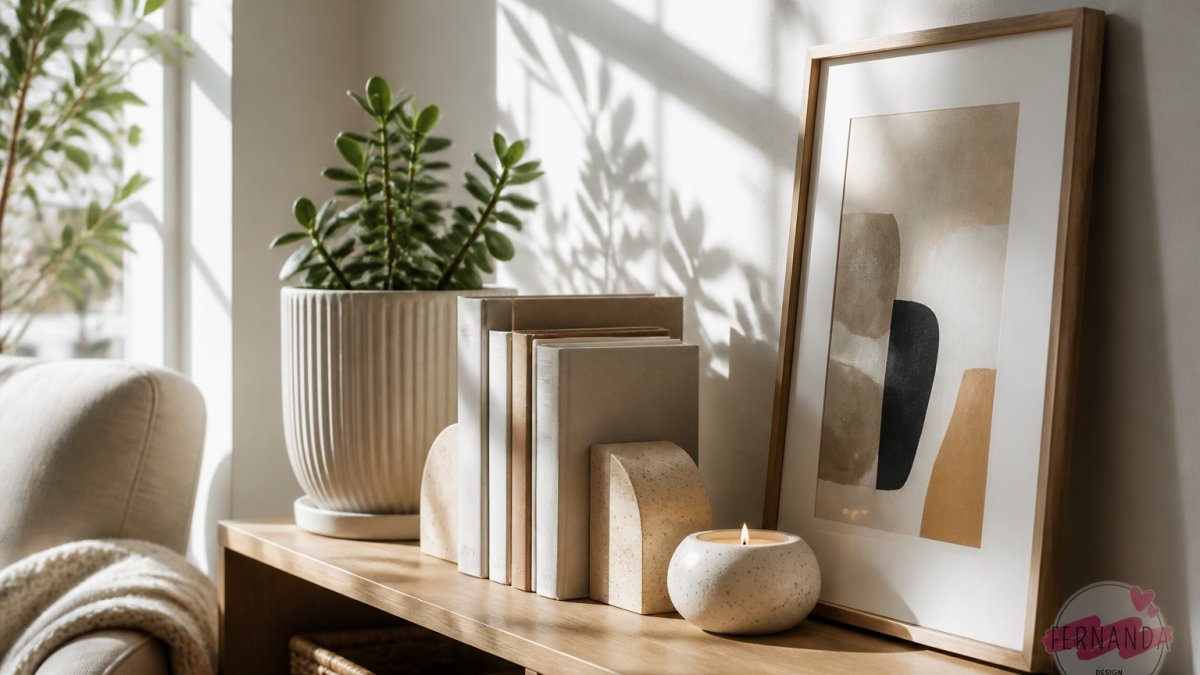
Art, Mirrors, and Wall Decor
Wall decor is where personal style shows up fastest. Original artwork, prints, and mirrors fill empty walls and add visual appeal without eating floor space.
A few practical tips:
- Hang art at eye level
- Match art size to wall size: a big wall needs a big piece or a group
- Use a mirror to bounce light
Mirrors do double duty as decorative items and light boosters. Place one across from a window and watch a dim corner brighten.
Lighting, Greenery, and Display Objects
Lighting sets the mood, and greenery brings a room to life. Together they're the decor essentials people notice first, even if they can't name why.
Soft lighting beats one harsh overhead bulb every time. Add a table lamp, a floor lamp, or a candleholder to warm up a room.
Display objects finish the job. The Cozy Planter is a good example: a ribbed decorative planter with a succulent that works on a desk, shelf, or windowsill and comes in several colors.

How to Choose Home Decor That Fits Your Space and Scale
The number one mistake we see is buying decor that's the wrong size. A tiny vase on a big console table disappears. An oversized mirror swallows a narrow hallway. Scale matters more than style, and the good news is that scale is measurable.
Start with a tape measure and a notepad. Record the room's length and width, the height of each wall, and the dimensions of every surface you plan to style: shelf depth, console width, coffee table footprint, and the wall area above each piece of furniture.
Artwork scale
- Above a sofa or bed: the art or gallery group should span about two-thirds of the furniture's width. A 72-inch sofa pairs well with art roughly 48 inches wide.
- Above a console or dresser: aim for art that is 50 to 75 percent of the furniture width, and leave at least 6 inches of breathing room on each side.
- Center height: hang the center of the piece at roughly 57 inches from the floor, or about 6 to 8 inches above the top of the furniture it sits over.
Rug sizing
An undersized rug is the most common scale error in living rooms and bedrooms. Use these starting points:
- Living room: choose a rug large enough that the front legs of every seating piece rest on it. In a typical 10-by-12-foot seating arrangement, that usually means an 8-by-10-foot rug or larger.
- Bedroom: a rug should extend at least 18 to 24 inches beyond each side of the bed. For a queen bed, an 8-by-10-foot rug works; for a king, go to 9-by-12-foot.
- Dining room: the rug should extend 24 inches beyond the table edge on all sides so chairs stay on the rug when pulled out.
Furniture and object placement
- On a shelf: objects should be about one-third the shelf height, grouped in odd numbers, with the tallest piece off-center.
- On a coffee table: keep the total decor footprint under one-third of the table surface so there is room for a drink or a book.
- On a console: layer a tall lamp, a medium stack of books, and a low bowl to create a triangle of heights.
Balance and visual weight
Visual balance comes from mixing heights and weights. Pair a tall lamp with a low stack of books. Group odd numbers of objects, like three candles or three small plants.
For small spaces and renters, choose pieces that do more than one job. A mirror that leans instead of hangs, a planter that sits on a desk, or coasters that protect a rental countertop all earn their place.
Functional Home Decor That Earns Its Place
Functional decor is the secret to a home that looks styled but stays livable. These are decorative items you actually use, so they never feel like clutter.
Think about what you reach for daily. Coasters, trays, bookends, candleholders, and catch-all bowls all count.
The Black Mosaic Coasters are a good example.

A quick test before you buy any decorative object:
- Will I use it at least weekly?
- Does it have a clear home in this room?
- Does it match at least two other pieces I own?
If you answer no to two or more, leave it on the shelf.
Sustainable Home Decor Ideas That Last
Sustainable home decor ideas come down to buying fewer, better pieces. The most sustainable item is the one you keep for years instead of replacing each season.
A 2026 trend report from Gift Shop Magazine's home decor outlook describes decor balancing contrasts, including heirloom quality with innovation and sustainability with luxury. That's a useful frame: choose pieces built to last, not pieces built to trend.
How to spot durable decor:
- Solid materials: real wood, stone, ceramic, and natural fibers outlast thin plastics
- Timeless design: simple shapes age better than novelty items
- Easy care: check whether a piece can be cleaned or repaired
Research published in Frontiers in Computer Science on screen-inspired decor shows people build identity through the decor choices they make, which is a good reason to buy pieces that mean something to you. If you're building a more conscious buying habit, our guide on how to start conscious consumerism goes deeper.
A Room-by-Room Checklist With Purchase Order
A checklist keeps you from buying decor in the wrong order. Start with the pieces that do the most work, then add the finishing touches. The logic is simple: rugs and lighting anchor a room and set its mood, while art and small objects depend on everything else. Buying in this order also spreads cost over time so you are not furnishing a whole room in one expensive trip.
The purchase order, room by room
| Room | Buy First (anchor) | Buy Second (mood) | Buy Last (finish) |
|---|---|---|---|
| Living room | Area rug sized to the seating group | Soft lighting (floor or table lamp) | Art, mirrors, display objects |
| Bedroom | Bedside lamp | Textiles and throw | Wall decor |
| Entryway | Durable, washable rug | Mirror | Catch-all tray |
| Home office | Task light | Plant or greenery | Desk decor |
| Dining area | Table linens | Candleholders | Centerpiece objects |
| Bathroom | Washable rug or mat | Soft lighting | Small tray or plant |
How to sequence purchases across rooms
If you are furnishing more than one room, do not buy room by room from top to bottom. Instead, buy in waves so each room reaches a livable baseline before you add finishing touches:
- Wave one, anchors: rugs and primary lighting for the rooms you use most. These set scale and mood and are hardest to change later.
- Wave two, function: the daily-use pieces each room needs, such as a catch-all tray, coasters, or a bedside table lamp.
- Wave three, personality: art, mirrors, plants, and display objects. These are the easiest to swap and the most fun to shop for slowly.
A simple budget framework
Set a total number for the room before you shop, then split it roughly into thirds: about one-third for the anchor (rug or lighting), one-third for functional pieces, and one-third for finishing decor. If a single anchor piece would eat the whole budget, size down rather than skip the anchor, an undersized rug or a missing lamp will make every other purchase look unfinished.
Renter and small-space adjustments
- Swap permanent anchors for removable ones: a washable area rug, plug-in wall sconces, and leaning mirrors.
- Choose furniture with storage so decor and daily items share the same footprint.
- In rooms under 100 square feet, buy one anchor and one finishing piece per zone rather than filling every surface.
Shop Handmade Pieces That Make a Room Feel Personal
Handmade pieces can turn a styled room into your room. A custom name or a one-of-a-kind color adds warmth that mass-produced decor can't match.
When you shop, look for pieces made to order and details you can personalize. The Custom Name Letter is made to order with your chosen initial, name, and color, and works on shelves, desks, or nightstands. If you want more ideas, our guide on where to find handmade keepsakes covers how to spot real artisan work.

A few things to check before buying handmade:
- Ask what materials are used and how to care for them
- Confirm sizing, especially for made-to-order items
- Look for clear photos in different lighting
Frequently Asked Questions
What are the essential home decor items every home needs?
Start with pieces that work in almost any room: a mirror, two or three light sources, a plant or planter, artwork, a rug, and a few display objects like books or candles. These essentials cover visual appeal, warmth, and function at once. Add them room by room rather than all at once, and buy the largest pieces first, since scale sets the tone for everything else you place around them.
How do I choose home decor that is both functional and stylish?
Look for items that do a job and look good doing it. Coasters protect surfaces while adding texture, a planter holds a living plant while styling a shelf, and a decorative sign adds personality to a nightstand. Measure the space before you buy, check that the material suits daily use, and pick colors that repeat something already in the room so the piece feels intentional rather than added on.
How can I make my home feel personal without adding clutter?
Choose fewer pieces with more meaning. One handmade item with a story, such as a custom name letter or a small artisan-made sign, does more for a room than a shelf full of generic accessories. Keep surfaces about two-thirds clear, group small objects on a tray, and rotate seasonal pieces instead of displaying everything at once.
How can I decorate sustainably on a budget?
Buy less and buy better. Prioritize durable materials, handmade and locally made pieces, and items you can use every day rather than trend-driven accessories. A planter or a coaster set that lasts for years can cost less over time than repeated replacements. Shop your own home first, then add one considered piece per room instead of a full cart.
Choosing decor that fits your space, your habits, and your values takes a little thought, but it pays off in a home that feels calm and personal. At Fernanda Design, we make handmade decor and accessories designed to bring warmth and personality to everyday spaces. Explore our functional decor pieces like the Cozy Planter and Black Mosaic Coasters, or order a Custom Name Letter made just for you. Get started with Fernanda Design and build a home that feels like yours.
