

Build a Sustainable Capsule Wardrobe: A Step-by-Step Guide
Table of Contents
- Step 1: Assess Your Current Wardrobe
- Step 2: How to Declutter Clothes and Define Your Personal Style
- Step 3: Choose a Capsule Wardrobe Color Palette
- Step 4: Identify Essential Items and Quality Materials
- Step 5: Shop Ethical Clothing Brands and Calculate Cost-Per-Wear
- Step 6: Plan for Seasonal Transitions and Layering
- Maintain Your Sustainable Capsule Wardrobe
- Frequently Asked Questions
Last Updated: September 30, 2026
Step 1: Assess Your Current Wardrobe
Before you build a sustainable capsule wardrobe, pull out every piece you actually wear and sort by category: tops, bottoms, dresses, outerwear, and accessories. Exclude items you're keeping "just in case" or pieces that haven't fit in over a year.
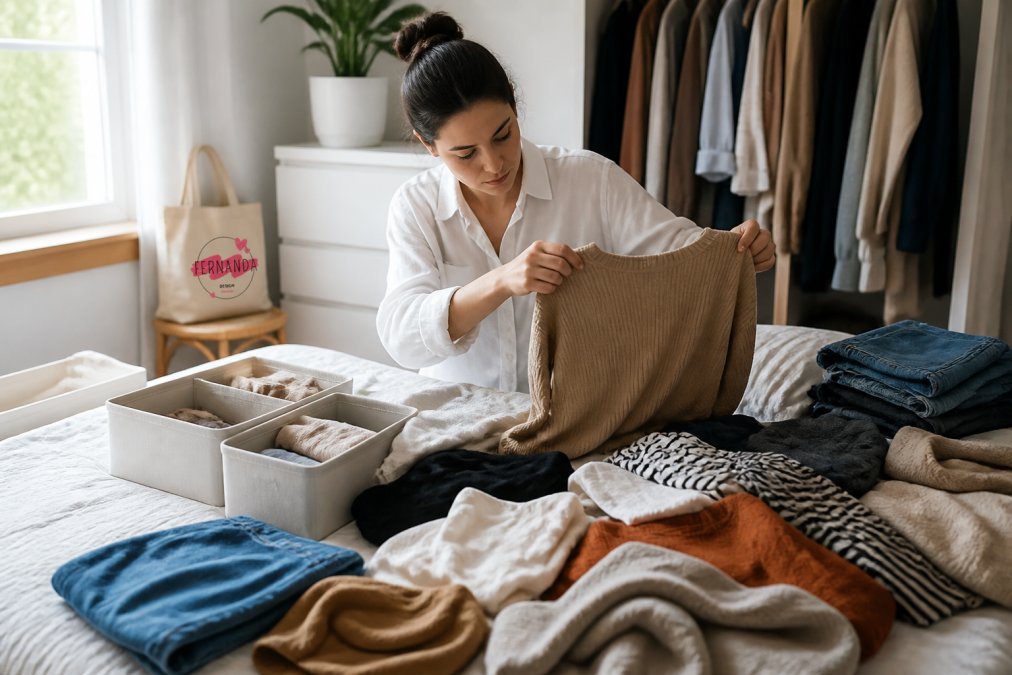
Note which pieces get worn repeatedly and which sit untouched. This reveals your natural style preferences, gaps, and the colors, fabrics, and silhouettes that make you feel confident, patterns that will guide your sustainable capsule wardrobe decisions.
Assess quality: which items have held up well, and which have faded or fallen apart? This teaches you what materials and construction methods last, preparing you to make smarter choices for your sustainable capsule wardrobe.
Step 2: How to Declutter Clothes and Define Your Personal Style
Decluttering clarifies who you are and what you actually want to wear. Remove anything that doesn't fit your current life, body type, lifestyle, or aesthetic. If you haven't worn it in a year and it doesn't spark genuine excitement, it's taking up space.
Patterns emerge about your true personal style: do you prefer neutrals or bold colors, fitted or relaxed silhouettes, minimalist or visually interesting designs? Your sustainable capsule wardrobe should reflect these authentic preferences, not fashion magazine ideals.
Consider your actual daily life. A sustainable capsule wardrobe that aligns with how you actually live, whether corporate, remote, or creative, gets worn more, lasts longer, and creates less waste.
Keep items that work across multiple outfits and seasons, pieces that layer well, match several other items, and transition from casual to dressed-up. When you define your personal style clearly, every piece in your sustainable capsule wardrobe earns its place.
Step 3: Choose a Capsule Wardrobe Color Palette
Your color palette holds a sustainable capsule wardrobe together. When every piece coordinates with most others, you maximize outfit combinations without needing more items. Choose 2-3 neutral base colors (black, navy, gray, beige, or cream) that work with your skin tone and make you feel good.
Add 2-3 accent colors that complement your neutrals and reflect your personality. Choose colors you genuinely love that work together, fewer pieces create more outfits with a cohesive color palette.
Test your palette before committing. Wear combinations together and photograph them in different lighting (natural, office, evening). Ensure colors feel right in environments where you actually spend time to prevent buying pieces that clash in real life.
Limit prints and patterns to a few key pieces using your chosen color palette so they integrate seamlessly with your sustainable capsule wardrobe.
Step 4: Identify Essential Items and Quality Materials
Every sustainable capsule wardrobe needs foundational pieces: well-fitting jeans, neutral trousers, basic t-shirts, a white button-down shirt, a blazer, and a sweater or two that form the backbone of countless outfit combinations.
Quality materials matter more than quantity when building a sustainable capsule wardrobe. Understanding sustainable textile options helps you make choices that align with your values.
Organic Cotton is grown without synthetic pesticides, reducing environmental harm. It's breathable, soft, and durable for basics. Trade-off: requires more water and costs 10-20% more. Look for GOTS certification to verify claims.
Tencel (Lyocell) is made from sustainably harvested wood pulp using a closed-loop process that recycles 99% of solvents. It's silky, breathable, and biodegradable, working well for dresses and blouses. Trade-off: more expensive and requires careful washing. Ideal if you prioritize manufacturing impact.
Recycled Polyester is made from post-consumer plastic bottles or textile scraps, diverting waste from landfills. It's durable and wrinkle-resistant. Trade-off: sheds microplastics and isn't biodegradable. Best for pieces you'll wear for years.
Linen is made from flax plants, requires minimal pesticides, and is fully biodegradable. It's durable and gets softer with age. Trade-off: wrinkles easily. Choose for pieces where wrinkles feel intentional.
Wool is a renewable fiber that naturally resists odors and wrinkles. Merino wool and cashmere are softer and more durable. Trade-off: requires careful washing and is expensive. Look for tight knit (at least 12-gauge) to resist pilling.
Check fiber content labels and look for certifications: GOTS for organic cotton, FSC for Tencel, Fair Trade or B Corp for ethical production. Avoid vague claims without third-party verification.
Pay attention to fabric weight and construction. A tightly woven organic cotton outlasts a loosely woven version. Examine seams and hems, they should be finished cleanly and stitched securely with matching thread.
Consider how materials perform in your climate and lifestyle. Your sustainable capsule wardrobe should be built on materials that work for your actual life while aligning with your sustainability values.
Midnight Infinity Convertible Necklace →
Step 5: Shop Ethical Clothing Brands and Calculate Cost-Per-Wear
Building a sustainable capsule wardrobe means choosing brands that prioritize fair labor practices, sustainable materials, and transparent production. Look for companies that openly share manufacturing locations and labor standards.
Cost-per-wear justifies investment in quality pieces. Divide the price by the number of times you'll wear it. A $60 sweater worn 120 times costs 50 cents per wear; a $20 shirt worn 5 times costs $4 per wear. Higher-quality pieces from ethical brands have lower cost-per-wear because they're worn more frequently and last longer.
Handmade and artisan-crafted pieces offer unique value for a sustainable capsule wardrobe. Brands like Fernanda Design create handcrafted accessories that add personality while supporting artisan makers. Their Midnight Infinity Convertible Necklace at $29.99 increases outfit combinations without adding bulk.

When shopping ethically, focus on pieces that genuinely excite you. A sustainable capsule wardrobe built on items you love gets worn more, reducing the waste from unworn purchases. Quality over quantity isn't just a slogan, it's the practical foundation of sustainable fashion.
Step 6: Plan for Seasonal Transitions and Layering
A sustainable capsule wardrobe works across seasons through strategic layering. Invest in pieces that transition between seasons: lightweight cardigans, denim jackets, and structured blazers work in spring, summer, and fall depending on what you layer underneath.
Layering extends lifespan and maximizes outfit variety. A sleeveless dress becomes three outfits with different sweaters or jackets. This creates seasonal variety without seasonal shopping.
Identify overlap periods where layering shines (usually spring and fall). A lightweight sweater, denim jacket, and structured cardigan bridge seasons effectively and should coordinate with your color palette.
Consider fabric weight for each season. Heavier knits and wool work for winter. Lighter linen and cotton work for summer. Medium-weight pieces transition between seasons. By choosing materials thoughtfully, you build a sustainable capsule wardrobe that actually works year-round rather than requiring constant shopping.
Maintain Your Sustainable Capsule Wardrobe
Building your sustainable capsule wardrobe is just the beginning. Maintenance and repair determine whether pieces last years or deteriorate quickly. This is where sustainability becomes tangible, every repair extends a garment's lifespan and prevents the need to replace it, multiplying the value of your initial investment.
Washing and Care
Follow care instructions carefully; they exist for a reason. Wash delicate items by hand, use cold water when possible, and air-dry pieces whenever you can. These simple practices extend garment life significantly. Cold water prevents fading and reduces energy use. Air-drying prevents the wear and shrinkage that machine drying causes. A quality sweater air-dried after every 3-4 wears will last 5+ years; the same sweater machine-dried weekly may deteriorate in 2 years.
Turn items inside-out before washing to reduce fading and pilling. Use a mesh laundry bag for delicate pieces. Wash similar colors together. For wool and cashmere, use a specialized wool detergent that won't strip natural oils. These habits cost nothing but add years to garment life.
Basic Repair Skills
Repair items promptly when damage occurs. A small hole becomes a large one if ignored.
Storage
Cost-Per-Wear Over Time
Refresh Thoughtfully
| Maintenance Task | Frequency | Impact on Longevity |
|---|---|---|
| Gentle washing (cold water, delicate cycle) | After every 2-3 wears | Prevents fading and fabric degradation |
| Air-drying instead of machine drying | Always when possible | Extends elastic and fiber life significantly |
| Prompt mending of small damage | Immediately when noticed | Prevents small issues from becoming unwearable |
| Proper storage (hangers, folds, clean space) | Year-round | Prevents wrinkles, fading, and pest damage |
| Professional cleaning for special pieces | 1-2 times per year | Maintains shape and appearance of delicate items |
Frequently Asked Questions
How many items should be in a sustainable capsule wardrobe?
Most sustainable capsule wardrobes contain 30-50 core pieces, though the exact number depends on your lifestyle and climate. Quality over quantity matters more than hitting a specific target. Focus on pieces you wear regularly and that work across multiple outfits. A smaller, intentional collection reduces waste and helps you know exactly what you own.
What's the best way to calculate cost-per-wear for sustainable fashion?
Divide the price of an item by the number of times you expect to wear it over its lifetime. A $100 jacket worn 100 times costs $1 per wear; a $30 shirt worn 5 times costs $6 per wear. Investing in durable pieces from ethical clothing brands often lowers cost-per-wear despite higher upfront prices, making them better value long-term.
How do I transition my current closet into a sustainable capsule wardrobe?
Start by assessing what you already own and keeping pieces that fit your personal style and color palette. Declutter items that no longer serve you by donating or selling them. Gradually fill gaps with quality essentials, prioritizing versatile neutral base layers and one or two statement pieces. This approach reduces waste and lets you build intentionally without starting from scratch.
Can I build a sustainable capsule wardrobe on a budget?
Yes. Shop secondhand and thrifted options to find quality pieces at lower prices. Prioritize a few essential, durable items over many cheap ones. Look for ethical clothing brands offering affordable lines, and invest gradually rather than all at once. Focus on versatility and timeless styles that won't go out of fashion, maximizing wear per piece and reducing the need to replace items frequently.