

9 Best Materials for Lightweight Statement Earrings
Quick Summary
The lightest statement earrings are usually made from polymer clay, wood, cork, or acrylic, because these materials are less dense than solid metal. Construction matters as much as material, so hollow forms and openwork designs keep the weight of lightweight statement earrings low even at a large size.
- Solid metal packs more weight into the same shape than hollow or lightweight composite materials.
- Posts, clasps, and coatings add weight, so a light body with a heavy backing still pulls on the ear.
- Polymer clay holds dramatic sculptural forms without the mass of metal but can crack if bent or dropped.
- Wood is best for dry-weather wear because moisture can warp it or change its color.
- Titanium is light for its strength and is often chosen for sensitive skin.
Table of Contents
- Why Material Decides How Heavy a Statement Earring Feels
- Lightweight Polymer Clay Earrings: Weight, Durability and Finish
- Lightweight Wood Earrings for Oversized Designs
- Metals, Coatings and Non-Metals Compared by Weight and Comfort
- Comfortable Earrings for Sensitive Ears
- How to Choose Lightweight Earrings by Use Case and Budget
- Trying Lightweight Statement Earrings From the Fernanda Design Collection
- Frequently Asked Questions
Why Material Decides How Heavy a Statement Earring Feels
Material is the first thing that decides whether a statement earring feels light or drags on your lobe by lunchtime. Two earrings of the same size can differ in weight by a wide margin, depending on what they are made from and how they are built.
Density is the main factor. A solid metal piece packs far more weight into the same shape than a hollow or lightweight composite. That is why an oversized design in one material can feel effortless while the same silhouette in another feels heavy within minutes.
Construction matters just as much as the base material. A solid-core piece, a hollow form, and a thin shell can all be shaped the same way and still weigh very different amounts.
Finish and backing add weight too. Posts, clasps, and any added coatings all contribute to the total. A lightweight body with a heavy backing still pulls on the ear.
Lightweight Polymer Clay Earrings: Weight, Durability and Finish
Polymer clay is one of the lighter materials used for statement earrings, and it can hold dramatic sculptural forms without the mass of metal.
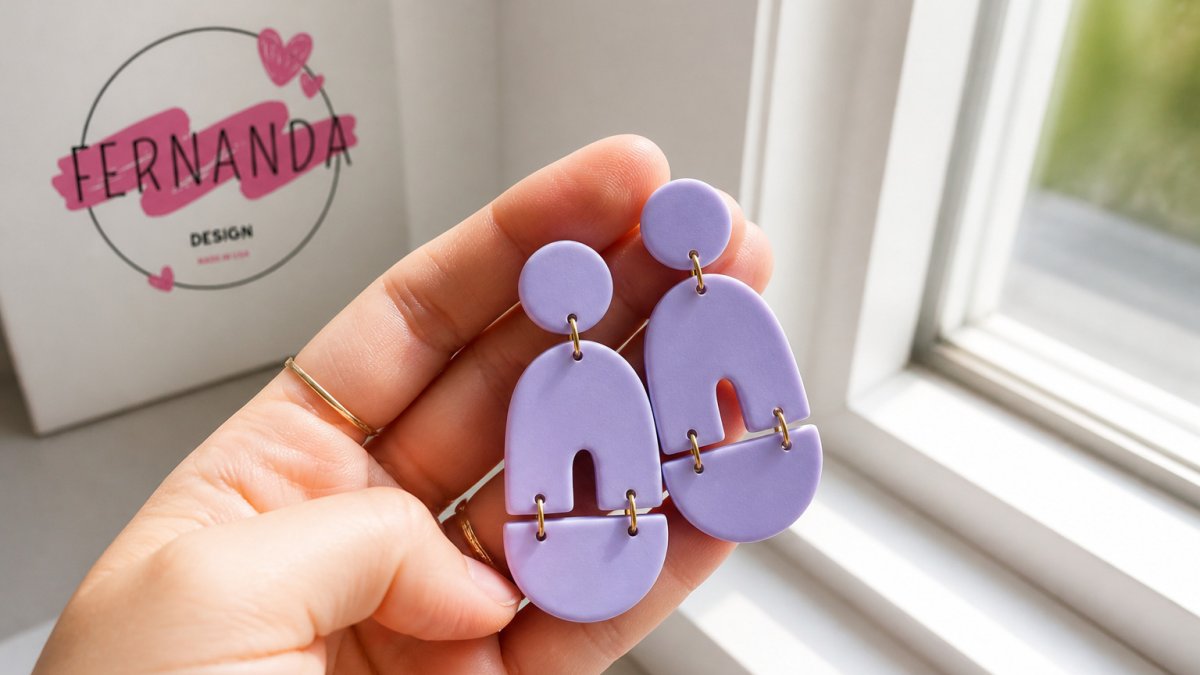
Durability is the question most buyers ask first. Properly cured polymer clay holds its shape and color well for everyday wear, but it is not indestructible. Read the durability guide for polymer clay earrings to see what makes them last and how to care for them. Avoid prolonged water exposure, harsh chemicals, and leaving pieces in hot cars or direct sun for long periods.
The finish affects both look and wear. A matte finish hides small scuffs better, while a glossy finish shows fingerprints but reflects light beautifully. The Violet Disc is a lightweight polymer clay option with a smooth matte finish.
Lightweight Wood Earrings for Oversized Designs
The trade-off is care. Wood responds to moisture and can warp or change color if it is soaked or left in humid conditions. It is best suited to dry-weather wear and careful storage. For sensitive ears, wood is also generally gentler than many plated metals, but the hardware it is paired with still determines how the earring sits.
Metals, Coatings and Non-Metals Compared by Weight and Comfort
Choosing between metals, coated metals, and non-metals comes down to a few practical criteria: weight, skin sensitivity, durability, and care. The table below summarizes how the main material families compare for lightweight statement earrings, with a focus on how each behaves in an oversized design rather than in a small stud.
| Material | Relative Weight | Sensitive-Ear Considerations | Durability | Best For |
|---|---|---|---|---|
| Polymer clay | Very light | Generally gentle, depends on hardware | Good for daily wear; can crack if bent or dropped | Bold sculptural shapes |
| Wood | Light | Gentle body, check posts and backs | Dry conditions only; warps with moisture | Oversized, textured looks |
| Cork | Very light | Gentle body, check adhesive and hardware | Moderate; can crumble at edges with rough handling | Large flat shapes and warm-weather wear |
| Acrylic and resin | Light to moderate | Generally inert body, check hardware | Good; can scratch and craze with heat or solvents | Graphic, glossy statement designs |
| Solid metal | Heavier | Check metal content | Very durable | Long-term everyday pieces |
| Plated metal | Moderate | Coating can wear and expose base | Moderate | Budget-friendly gold tones |
| Titanium | Light for its strength | Often chosen for sensitive skin | Very durable | Sensitive ears, active wear |
| Stainless steel | Moderate | Nickel content varies by grade | Very durable | Everyday posts and backs |
Weight is not only about the material. A solid metal disc and a hollow metal disc of the same diameter can differ substantially in weight because the hollow form removes mass from the center.
Construction details that change total weight:
- Hollow forms and domes remove material from the interior while keeping the visible silhouette large.
- Openwork and cutouts reduce mass and also let the earring flex slightly, which can feel lighter on the lobe.
- Thin profiles in any material lower weight, but very thin metal can dent and very thin clay can chip.
- Component size matters as much as the body: oversized posts, heavy backs, and large jump rings add grams that the front design does not show.
- Lever-back and hoop fittings distribute weight differently than straight posts, which changes perceived heaviness even when the scale reads the same.
Non-metals keep weight low but require more attention to care. Polymer clay, wood, cork, acrylic, and resin are all lighter than solid metal at the same size, but each has a different weakness: clay cracks, wood warps, cork crumbles, acrylic scratches, and resin can yellow with prolonged sun exposure.
Comfortable Earrings for Sensitive Ears
Sensitive ears usually react to a specific metal, a coating that has worn thin, or a post that is too rigid. Lightweight design helps because less weight means less pressure on the earlobe, which matters most for pieces you wear for hours.
Look for hypoallergenic hardware and check the metal content of posts and backs before buying. Our statement designs, including Azurea, Obsidia, Lavelle, and Paradisa, are listed with hypoallergenic hardware and a lightweight build. Browse lightweight polymer clay earrings for sensitive ears to see the designs made for that need.
Give new earrings a short test before a long day. Wear them for an hour, then check for redness, itching, or heaviness. If a piece pulls on your lobe, a lighter design or a different backing will usually help.
How to Choose Lightweight Earrings by Use Case and Budget
Start with how and where you plan to wear the earrings. Daily wear calls for durable, low-weight materials. Occasion wear allows a bit more drama, since you will be wearing them for fewer hours. Gifts should lean toward pieces with a clear, low-maintenance finish.
Match the material to the wear pattern:
- All-day office or commute wear: polymer clay, cork, or thin acrylic in a hollow or openwork shape. These keep weight low and tolerate repeated handling.
- Evening or event wear: a bolder clay or acrylic statement piece is fine because the wear window is short; reserve plated metals for pieces you will not wear against sweat or perfume for long stretches.
- Active or humid conditions: titanium or stainless steel hardware with a non-porous body. Wood, cork, and unsealed clay are poor matches for sweat, swimming, or workouts.
- Sensitive ears: prioritize the post and backing metal first, then the body material. A gentle clay body on a nickel-releasing post will still irritate.
Comfort, fit, and earlobe strain. Weight is only half the comfort story; leverage is the other half. A long, heavy drop puts more torque on the piercing than a shorter, heavier piece, because the mass sits farther from the lobe. Watch for these signs that an earring is pulling:
- The piercing hole looks elongated or the earring tilts forward.
- You feel a dull ache at the lobe by mid-day.
- The back leaves a deep indentation or the earring leaves a red mark.
- You catch yourself lifting the earring with a finger to relieve pressure.
If any of these appear, switch to a shorter drop, a lighter body, or a fitting that sits closer to the lobe. Post placement matters too: a post set high on the earring balances better than one set at the very top edge.
Durability and care trade-offs. Lightweight materials fail in different ways, so choose for your lifestyle:
- Polymer clay: resists tarnish and water better than wood, but can crack if bent or dropped. Store pairs separately.
- Wood and cork: warp, stain, or crumble with moisture. Keep dry and wipe with a soft cloth; avoid soaking.
- Acrylic and resin: scratch and can craze with heat or solvents. Keep away from hot cars and perfume.
- Plated metal: the finish wears with friction and sweat; re-plating is rarely practical, so treat plated pieces as shorter-term.
- Titanium and stainless steel: the most water- and sweat-resistant options, and the safest bet for sensitive ears when the specific grade is named.
Budget shapes the choice too. Our statement earrings are priced at $12.99 each. Ask yourself these questions before you buy:
- How many hours will I wear them at a stretch?
- Will they face water, sweat, or heavy workouts?
- Do I have metal sensitivities or sensitive ears?
- Do I want a bold statement or a quieter, everyday shape?
- Does the weight sit close to my lobe, or does it hang far below it?
Match the answers to a material and a construction. Daily-wear shoppers usually do best with polymer clay or a hollow acrylic, while those who want warmth and an organic look may prefer wood for dry-weather outings. If you are unsure how bold earrings work with a necklace, see how to pair bold earrings with necklaces. Sensitive-ear shoppers should start with the post and backing, then choose the body.
Trying Lightweight Statement Earrings From the Fernanda Design Collection
The best way to judge weight is to hold a pair and wear it. Our collection is built around lightweight statement earrings in a range of colors and sculptural shapes. You can view the Azurea earrings to check their weight and design before you buy.

Lavelle offers a soft lavender finish, and Paradisa brings vivid pink with golden accents for summer wear. Violet Disc, our geometric piece, suits anyone who wants a minimalist, everyday option. Each design is handmade with hypoallergenic hardware and is priced at $12.99. If you are comparing related items, you can browse the Choosin Texas Western Graphic Cap alongside the collection.
Start with one pair that matches your most common outfit. Wear it for a full day, then decide whether a bolder shape or a lighter one fits your style best. Shop the collection at Fernanda Design and find the pair that feels right on your ears.
Frequently Asked Questions
What materials make the lightest statement earrings?
Polymer clay and wood are generally among the lightest materials for large statement earrings, because both are less dense than metal. Weight also depends on construction: hollow forms, thin backings and smaller posts lower the load on the earlobe. Compare the stated weight or dimensions of each pair rather than relying on material alone, since a large solid piece can still feel heavy. Fernanda Design's Lavelle and Violet Disc earrings are examples of lightweight pieces.
Are polymer clay earrings lightweight enough for all-day wear?
Polymer clay earrings are light enough for most all-day wear, especially at moderate sizes. Their comfort depends on the size of the piece, the post and the weight of any attached hardware. Start with a shorter wear period to check how the earring sits on your ear before wearing a larger design for a full day.
Which earring materials are best for sensitive ears?
Sensitive ears usually react to nickel and other metal alloys, so look for hypoallergenic hardware and be cautious with plated or unidentified metals. Fernanda Design's statement earrings, including Azurea, Obsidia, Lavelle, Paradisa and Violet Disc, list hypoallergenic hardware in their product features. Check each listing for the specific post material before buying, and test a new pair for a few hours before wearing it all day.
How can you tell if statement earrings will feel heavy?
Check the listed dimensions and material, then compare the size of the earring to your earlobe. Larger drop and sculptural designs put more weight on the ear, so a bigger piece is not always a heavier one if it is hollow or lightweight. Try on a pair for 15 to 20 minutes and notice whether the post pulls or the lobe feels tender. A smaller or lighter design often gives the same look with more comfort.
